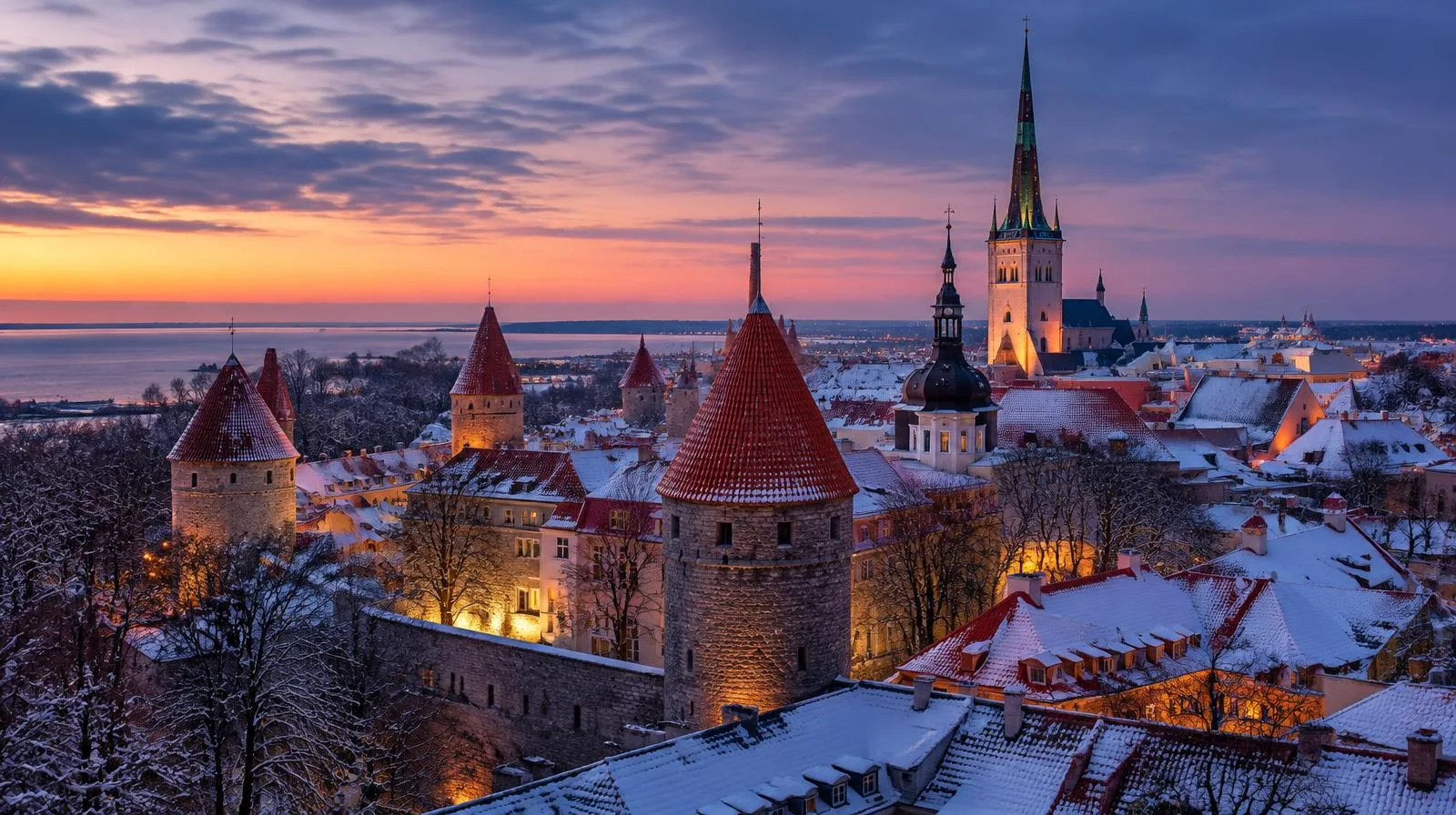
Wander through the cobbled lanes of Tallinn’s Old Town at dusk, stand beneath the Art Nouveau facades of Riga, or explore the baroque streets of Vilnius, and you will sense centuries of change etched into the Baltic stone. For the travelling brother, this northeastern rim of Europe offers a compelling encounter with the Craft. Here, Freemasonry’s history includes eighteenth-century beginnings, imperial prohibition, occupation and modern restoration. Exploring freemasonry in the baltic states is a study in historical endurance, but also in the differences between three countries. Their lodges did not all follow the same chronology, and their revival should not be mistaken for an uninterrupted institutional lineage stretching back to the Enlightenment.
The Baltic Crossroads: Enlightenment, Empire, and Early Lodges
To understand Baltic Freemasonry, one must first travel back to the eighteenth century. The territories of present-day Estonia, Latvia and Lithuania then belonged to different political and cultural settings. Riga was within the Russian Empire, while Vilnius belonged to the Grand Duchy of Lithuania within the Polish-Lithuanian Commonwealth. Masonic connections crossed those borders. The Latvian historical record, in particular, reveals English, German, Swedish and Russian influences, adding a regional chapter to the broader story of how Freemasonry conquered the world.
In Tallinn, historically known as Reval, the first lodge established in what is now Estonia was Isis. The Grand Lodge of Estonia places its origins within 1771-1773; an encyclopedia-based account dates its activity to 1773-1792 and 1811-1820. That account also records that the lodge had no building of its own and most often met at the town hall pharmacy, the Raeapteek. In Riga, Lodge Zum Nordstern, or North Star, was founded in 1750. The Latvian Grand Lodge’s historical overview describes its renaming as Zum Schwerdt, the Lodge of the Sword, and transfer to Strict Observance in 1765. Johann Gottfried Herder was himself initiated into the Sword lodge in 1766, rather than merely being associated with people around it.
Further south, Vilnius developed its own Masonic life. The lodge known in Polish as Gorliwy Litwin and in Lithuanian as Uolusis lietuvis, the Zealous Lithuanian, is recorded as founded in 1780. Vilnius University Museum connects its origins with Enlightenment ideas and the reforming atmosphere of the late Commonwealth. Its stated concerns included education, the dissemination of knowledge, charity, freedom, equality and tolerance. These aspirations deserve attention without turning lodge rooms into idealised sanctuaries free from social or political tensions. The region’s Masonic history is richer when read through actual institutions, objects and individual lives rather than a single romantic narrative.
Centuries of Silence: Imperial Bans, the Holocaust, and Soviet Darkness
The early development of Baltic Masonry was interrupted by imperial restrictions. In 1822, Tsar Alexander I ordered the closure of Masonic lodges and other secret societies in the Russian Empire and prohibited their future establishment. This was a decisive rupture, with clear connections to the wider history of Freemasonry in Russia. It does not, however, establish that every Baltic lodge had worked continuously until that date, or that every subsequent period was equally silent. Individual lodges had already experienced interruptions, and later revivals varied by country.
The emergence of independent Baltic republics in 1918 opened a different political chapter. Latvia’s Grand Lodge history records a Masonic restoration in 1921, while an account of Estonian Freemasonry records the establishment of the mixed-gender Le Droit Humain lodge Kalevipoeg in Tallinn in 1926. These examples rule out a simple claim of nearly 170 years of uninterrupted prohibition throughout all three countries. In 1940, the Soviet Union occupied and annexed Estonia, Latvia and Lithuania. Repression followed, including mass deportations in June 1941. The evidence documents these crimes against Baltic populations, but does not justify identifying a particular group of deportees as former Freemasons without additional records.
Nazi Germany occupied the Baltic countries in 1941. The Holocaust devastated their Jewish communities, while Nazi rule also brought persecution of other groups. Latvia’s Grand Lodge history explicitly describes the persecution of Masonic activity under both Soviet and Nazi occupation. Readers exploring WWII Masonic sites should distinguish that documented institutional history from unverified stories about particular brethren or looted lodge archives. Soviet rule was re-established across most of the region in 1944, with fighting continuing into 1945. The subsequent decades brought further repression, including the mass deportations of 1949. Latvia’s Grand Lodge account records that Masonic activity was banned during the post-war communist period. These overlapping histories should be approached with care, without treating different victims and forms of persecution as interchangeable.
Estonia: Phoenix from the Northern Embers
Estonia restored its independence in 1991, creating the conditions for a new chapter in its Masonic history. The Grand Lodge of Estonia dates the restoration of the organisation to 1992, when Lodge Fööniks, or Phoenix, began activity. Finland played a central role in the rebuilding. A contemporary Masonic research account distinguishes the Finnish chartering of four Estonian lodges between 1993 and 1998 from the earlier beginnings of the revival. This distinction matters: the start of activity and the granting of a charter need not be the same event.
On 18 May 1999, the Grand Lodge of Estonia, Eesti Vabade ja Tunnustatud Vabamüürlaste Suurloož, was established. Finnish assistance helped the lodges reach that point of independent organisation. The Grand Lodge’s published history lists lodges in Tallinn, Tartu, Pärnu, Haapsalu, Viljandi and Rakvere. Its historical webpage gives figures of eighteen lodges and approximately 500 members, but these should be treated as figures from that page, not as a verified current census. They do not support the original claim of thousands of members across dozens of lodges.
The phoenix offers a powerful metaphor for this restoration. It is, of course, a mythical bird, and the symbolism should not be confused with documentary evidence about why a particular lodge name was chosen. For the visitor, Tallinn’s old streets invite reflection, but medieval architecture alone cannot prove a link to speculative Freemasonry. The documented association between Isis and the Raeapteek is a more useful historical starting point than searching every guildhall for supposed Masonic clues. Even there, a former meeting place should not be assumed to contain a present-day Masonic exhibition or to offer access to the rooms once used by brethren.
Latvia: The Restoration of Riga’s Masonic Soul
Crossing south into Latvia brings you to Riga, a city whose streets reward both architectural curiosity and historical restraint. After the restoration of independence in 1991, German Masonic bodies helped rebuild the Craft. Latvia’s Grand Lodge history records the admission of the first brethren of this revival in 1993 and the reactivation of the pre-war lodge Jāņuguns, St. John’s Fire, in May 1996 by the Grand Lodge of Ancient Free and Accepted Masons of Germany. The same account describes assistance from more than one German jurisdiction. It does not support assigning both the Swedish and Rectified Scottish rites to Jāņuguns as the original article did.
On 8 March 2003, three regular lodges previously working within the fraternity of the United Grand Lodges of Germany united to establish the Grand Lodge of Latvia. Its founding statement emphasises the revival and cultivation of traditions associated with earlier lodges in Riga, Jelgava, Liepāja and Aizpute. This is a claim of historical and cultural inheritance, not proof that those eighteenth-century organisations survived every intervening political upheaval intact. The variety of influences remains an important part of the Latvian story, rather than an inconvenience to be smoothed into a single ritual tradition.
For the visiting observer, Riga’s Art Nouveau streets offer ample rewards without needing a claim to the world’s highest concentration of that architecture. Enjoy the ornament along Alberta iela and Elizabetes iela, but do not assume that every geometric tool or allegorical figure identifies a lodge. The Riga Museum of World Freemasonry specifically cautions against reading decorative facade motifs as proof of Masonic occupation. It identifies the house at 9/11 Peitavas Street as associated with the first Riga lodge and its co-founder Johann Zuckerbecker. This documented connection is more valuable than speculative symbol hunting, and offers a useful principle for exploring hidden Masonic sites: establish the building’s history before interpreting its decoration. A historic address is not, by itself, an invitation to enter private property.
Lithuania: Rebuilding the Craft in Vilnius and Kaunas
Lithuania declared the restoration of its independence in 1990. Its modern regular Masonic revival received important German support. A report published in the Masonic history journal Ars Regia records the establishment of Lodge Renaissance in Vilnius on 27 August 1993, with German brethren participating in a ceremony conducted in Lithuanian and German. The evidence does not substantiate the original name Vilnius Renascens or the suggested joint German and French sponsorship of this particular revival. A subsequent chronology records Vilnius Orient in 1995 and Uolusis lietuvis in Vilnius in 1999.
On 13 April 2002, the Grand Lodge of Lithuania was established in Vilnius. Its constitution uses the name Lietuvos Senųjų laisvųjų ir pripažintųjų mūrininkų Didžioji Ložė and invokes the tradition of the Grand Lodge established in the Grand Duchy in 1781. That constitutional reference expresses a commitment to an older tradition, rather than an assertion of continuous administration. The available chronology places the founding of the Švento Jono, or Saint John, lodge in Kaunas in 2005, after the modern Grand Lodge’s establishment. There is no need to invent an earlier sequence of lodges in Kaunas and Klaipėda to make the restoration meaningful.
Vilnius offers the traveller a distinctive baroque setting, and Vilnius University, founded in 1579, is an especially rewarding place to explore the city’s intellectual past. Its museum preserves a badge of the Zealous Lithuanian lodge and interprets the lodge’s symbols and social aims. The museum explains that the historical term “Lithuanian” in the lodge’s name referred to belonging to the Grand Duchy, a useful reminder not to impose present-day national categories on eighteenth-century identities. Walk the university courtyards with that complexity in mind. An object with a documented provenance can bring the past closer than an imagined meeting in an unidentified palace. Check the museum’s current information before assuming that a particular object is on display.
Planning Your Baltic Masonic Journey
A journey through Estonia, Latvia and Lithuania can be an unforgettable addition to a brother’s itinerary. Plan the three capitals as distinct destinations, allowing time for their wider histories as well as Masonic research. Compare current coach, road and flight options rather than assuming that direct regional flights or convenient connections will be available on your dates. Above all, separate public sightseeing from attendance at a private lodge meeting. One may be arranged independently; the other requires attention to recognition and the host jurisdiction’s procedures.
- Formal Contact and Clearance: If you hope to attend a tiled meeting, do not arrive unannounced. Ask your own lodge secretary or Grand Secretary how to establish eligibility, confirm recognition and arrange an introduction. Begin well before departure, using the practical framework in our travel planning tips for Freemasons. A place on a travel itinerary is not a guarantee of admission to a lodge.
- Jurisdictional Protocol: Follow the communication channels prescribed by your home Grand Lodge. Ask whether correspondence must pass through Grand Secretaries and what the host requires, rather than treating one jurisdiction’s procedure as a universal rule. Our guide to international Masonic visitation protocol provides a starting point. Confirm the meeting date, degree, language and any dining arrangements through the approved contact.
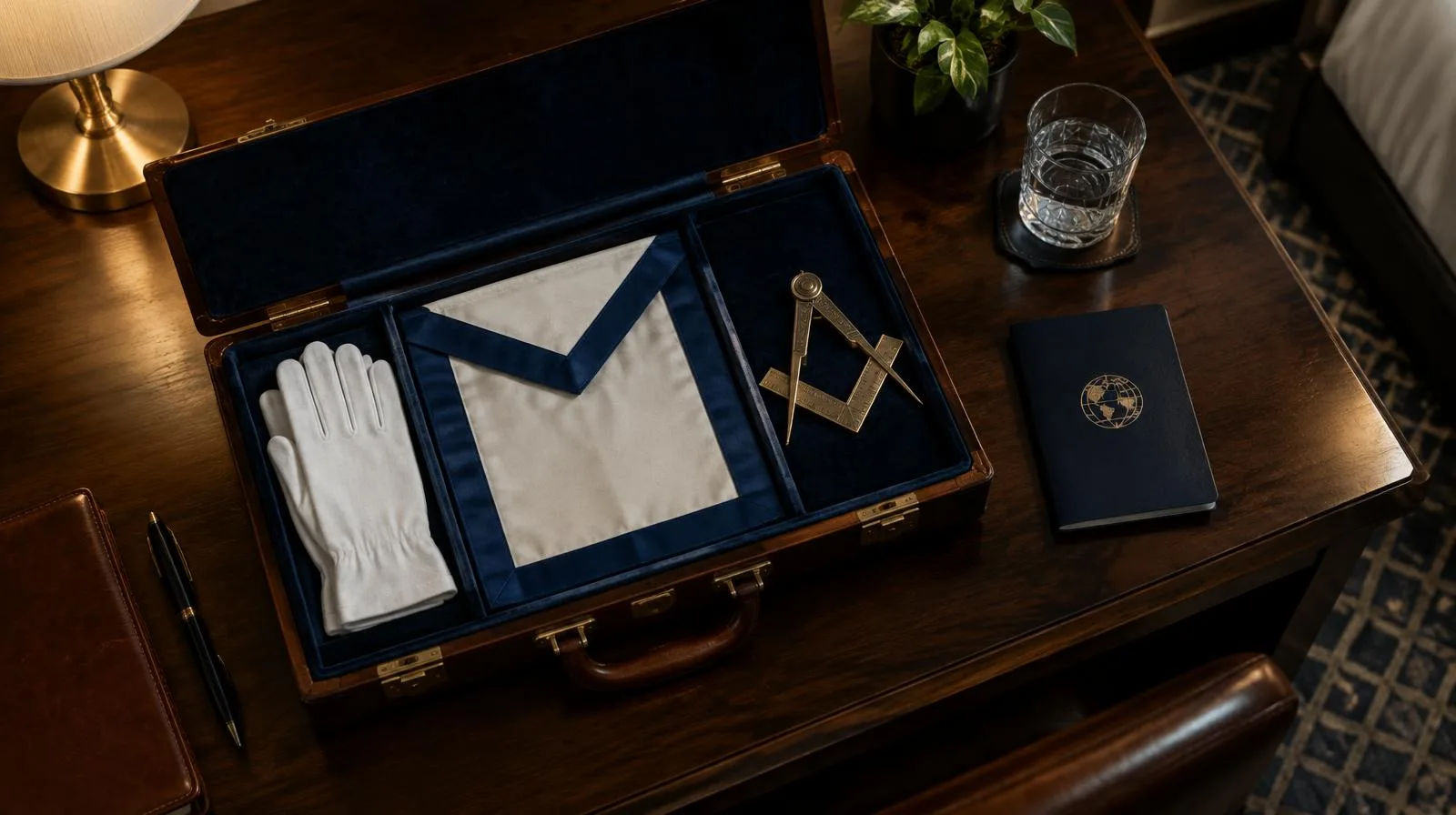
- Regalia Considerations: Obtain the actual dress and regalia instructions for the meeting you will attend. Do not assume that a dark suit, a particular apron or your usual jewels will be appropriate everywhere. If you are asked to bring regalia, review our guidance on traveling with Masonic regalia and check transport requirements before packing. Ask which identification and Masonic credentials the host expects.
- Visiting Public Sites: Riga has a dedicated Museum of World Freemasonry, so public Masonic interpretation is not confined to general history museums. Vilnius University Museum also documents a historical lodge object in its collection. Consult official museum information for current opening hours, admission prices, access arrangements and exhibitions. A collection record does not establish that an object is permanently displayed, and a working lodge should never be assumed to operate as a tourist attraction.
Frequently Asked Questions About Baltic Freemasonry
Is Freemasonry regular and recognised in all three Baltic States today?
Yes. The Grand Lodge of Estonia, established in 1999, the Grand Lodge of Latvia, established in 2003, and the Grand Lodge of Lithuania, established in 2002, are recognised by the United Grand Lodge of England. That does not mean every Masonic organisation in these countries is recognised by UGLE, nor does it imply universal recognition by every other grand lodge. Recognition is a relationship between particular jurisdictions. Before arranging a visit, confirm your own Grand Lodge’s current position.
Can visiting foreign Freemasons attend Baltic lodge meetings?
Visits may be possible for eligible brethren where the relevant grand lodges recognise one another, subject to the host’s rules and approval. Arrange the visit through the channels required by your home jurisdiction. Ask exactly which documents, identification and introductions are needed, rather than assuming that a dues card and certificate form a universal Baltic requirement. Confirm the working language and whether any assistance is available for visitors who do not speak it. Admission should never be treated as automatic.
Are there dedicated Masonic museums open to the public in the Baltics?
Yes. Riga has the Museum of World Freemasonry, whose own website provides historical material about Latvian Masonic heritage. Check its official visitor information for current access arrangements. Vilnius University Museum also publishes information about a Zealous Lithuanian lodge badge in its holdings. These examples do not justify claiming that museums in all three capitals routinely display tracing boards, minute books and jewels. Confirm individual exhibitions before making a special journey.
What makes the history of Freemasonry in the Baltic States unique?
Its distinctive character lies in the combination of cross-border eighteenth-century influences, imperial restrictions, differing interwar experiences, twentieth-century occupations and internationally assisted modern restoration. Finnish assistance was central in Estonia, while German support was important in Latvia and Lithuania. There was no single, uninterrupted 170-year prohibition shared identically by all three countries. Their histories are connected, but not interchangeable. For the travelling brother, that is the real reward: encountering a restored fraternity while learning to distinguish documented continuity, revived tradition and the gaps left by political upheaval.
Sources
- Grand Lodge of Estonia: history and founding principles
- Grand Lodge of Latvia: revival of Freemasonry in Latvia, archived account
- Grand Lodge of Latvia: establishment on 8 March 2003
- Grand Lodge of Lithuania: constitution and historical tradition
- Vilnius University Museum: the Zealous Lithuanian lodge and its badge
- Riga Museum of World Freemasonry: Peitavas Street and architectural symbolism
- United Grand Lodge of England: foreign grand lodges and recognition
- Lauri Mälksoo: Soviet mass deportations in the Baltic states and international law