Few moments in a traveling brother’s life promise the quiet thrill of approaching a lodge in an unfamiliar foreign city, wondering what fellowship awaits beyond the door. Whether your itinerary takes you to London, Valletta, or Buenos Aires, a carefully arranged visit can turn a journey into something more personal than a procession of landmarks. Yet visiting a masonic lodge abroad is neither as simple as knocking on the door unannounced nor as formidable as navigating an impenetrable labyrinth of secrets. The surest preparation combines respect for your own Grand Lodge’s rules, attention to the host’s requirements, and the courtesy of asking before assuming.
The Universal Chain: Regularity, Recognition, and Amity
Before packing your apron or scouting addresses, distinguish regularity from recognition. Freemasonry has no single worldwide governing authority. Grand Lodges govern their constituent lodges, and each determines its own recognition relationships. UGLE explains recognition as its acceptance that another Grand Lodge is regular in its formation and practice, with intervisitation acceptable between their members. That does not mean recognition by UGLE automatically authorizes a visit by a member of another constitution. Your starting point must be the rules and recognition decisions of the Grand Lodge under which you currently hold membership, not necessarily the jurisdiction where you were first initiated.
For a broader historical perspective, explore how Freemasonry conquered the world. For the traveler, however, the practical distinction matters more than any sweeping account of worldwide unity. Recognition criteria in regular Masonic jurisdictions commonly address lawful formation, independent governance, belief in God or a Supreme Being, the Sacred Law, and the symbolic degrees. Their precise wording belongs to each jurisdiction. Do not treat a short checklist as a substitute for an official recognition decision, or assume that every organization using Masonic terminology follows the same principles.
Check the specific lodge’s governing body, not merely its country. UGLE notes that some countries contain several Grand Lodges and that its recognition arrangements include exceptions to the general pattern of recognizing one per territory. Pennsylvania expressly permits its members to visit only lodges under jurisdictions it recognizes. Directories such as the List of Lodges, Masonic can help identify lodges and affiliations, but inclusion is not a universal permission slip. Ask your own Grand Lodge to confirm that the proposed visit is permitted under the relevant recognition relationship and current rules.
The Protocol Chain of Command: Grand Secretary to Grand Secretary
The safest first approach is to your own lodge secretary or Grand Lodge office, following your jurisdiction’s procedure. Official correspondence between Grand Lodges commonly passes through their Grand Secretaries, but restrictions on other contact are not identical everywhere. Freemasons New Zealand instructs members and lodges not to contact another constitution’s Grand Secretary directly without permission. Pennsylvania goes further, requiring prior approval through the respective Grand Secretaries before its members correspond with another Grand Lodge or its subordinate lodges. A publicly displayed email address does not override those requirements.
Begin planning well before departure, but do not mistake a suggested planning interval for a worldwide rule. Pennsylvania asks members to allow one month to obtain a Travel Commission. New Zealand advises planning ahead without specifying that same interval. Give your own office your travel dates, destinations, membership details, and any particular lodge you hope to visit. Ask what notice is required, what documents it issues, and when you may communicate with the host. Do not assume the office will automatically arrange the whole evening or send an identical letter in every jurisdiction.
Let courtesy travel ahead of you: establish recognition, follow the approved correspondence route, and confirm the arrangements before approaching the lodge door.
New Zealand provides a useful concrete example. Its overseas-visitation guidance describes a reply to the member’s inquiry that includes a Travel Certificate, lodge information, and other destination information, sent through the member’s lodge secretary. The secretary confirms that dues are current before issuing the certificate. Other jurisdictions may use different procedures or document names. When organizing the rest of your voyage, consult our guide to travel planning tips for Freemasons, and keep the lodge’s confirmation alongside your transport and accommodation details.
Planning Your Visit: Essential Documents and Due Examination
Paperwork deserves space in your travel preparations, but there is no single international bundle that guarantees admission. A lapel pin is not proof of membership, and a certificate does not replace every other check. Ask both your home office and, through the permitted channel, the host what you must bring. The following is a checklist for that conversation, not a claim that every item is compulsory everywhere.
- Grand Lodge Certificate: Bring it if required or advised. New Zealand specifically says its Travel Certificate should be used with the member’s Master Mason’s Certificate. English guidance on proving visitors also provides for production of a Grand Lodge Certificate when required. Neither establishes a blanket requirement across entire continents.
- Current Dues Card: Where your jurisdiction issues one, check its validity for the proposed meeting. Maine’s handbook expressly requires a current year’s dues card for visitors. Ask what alternative evidence is accepted if your constitution uses a different system.
- Official Letter or Travel Certificate: Obtain the document your jurisdiction prescribes. Confirm who issues it, what membership or good-standing information it certifies, and whether the host needs anything further.
- Valid Photo Identification: Ask whether identification must accompany your Masonic credentials. The published visitation protocol between the Grand Lodge of Texas and the Prince Hall Grand Lodge of Texas requires picture identification, illustrating a specific rule rather than an automatic worldwide standard.
Ask your host what time to arrive and whom to meet. Leave enough time for introductions and any necessary checks, rather than treating 45 minutes as a universal requirement. Guidance on proving visitors published by the District Grand Lodge of Cyprus quotes English rules requiring personal knowledge and vouching, or vouching following due examination. It also refers to certificates and proof of good standing when required. The host’s officers must apply the rules governing their lodge.
Do not be intimidated, but do not assume an examination follows one international script or that sincerity alone establishes eligibility. Before departure, ask your own lodge for appropriate preparation. At the destination, explain which constitution and working you know, and follow the host’s instructions. Admission is not guaranteed simply because you have traveled a long way or obtained an introduction. If you are venturing out as a solo Masonic traveler, an agreed contact and clear arrival arrangements can make the evening considerably less uncertain.
Regalia and Sartorial Customs: Dressing for the Destination
Few discoveries are less welcome than realizing that the clothes in your suitcase do not match the evening’s expectations. Avoid turning national stereotypes into a packing list. Dress can vary between lodges within the same constitution, and a special meeting may require different arrangements from an ordinary one. Ask for the actual dress instructions for the meeting you will attend, including shoes, tie, gloves, and regalia.
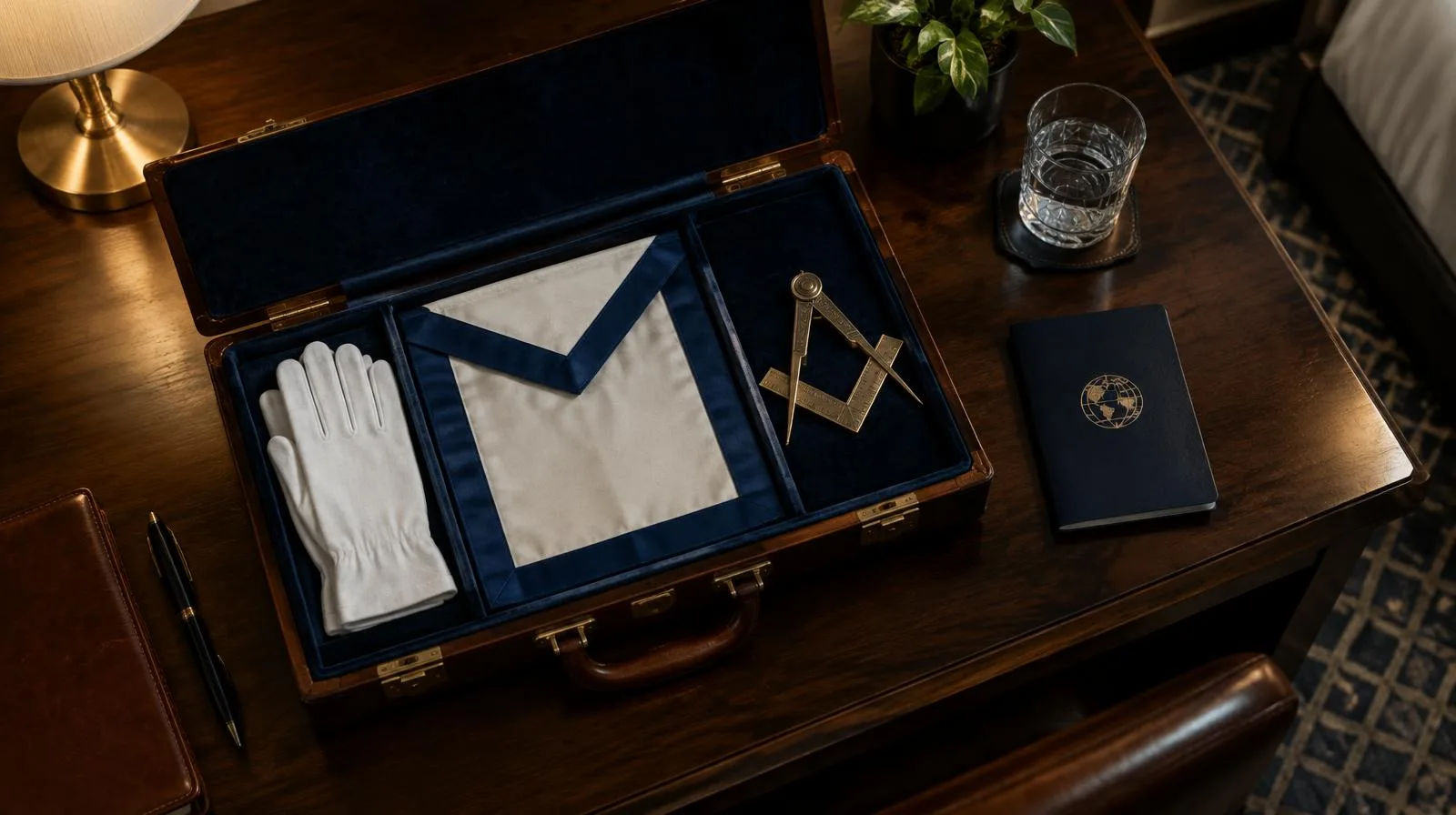
A dark suit may be a useful starting point for that inquiry, but it is not a worldwide guarantee. West Lancashire’s published guidance says English Masons are generally expected to wear a dark suit, white collar, black shoes, and a permitted tie. It adds that the required standard is usually stated on the summons and that white gloves are worn in most lodges. Keep the scope of that advice clear: it is not evidence for every lodge in Europe or elsewhere.
- England and Ireland: For an English visit, consult the summons and ask which tie and gloves are appropriate. Confirm Irish requirements separately rather than assuming identical rules. If your journey includes the headquarters at Great Queen Street, our guide to Freemasons' Hall in London can help orient your planning, but obtain meeting-specific instructions from your host.
- Continental Europe: Ask whether the particular meeting calls for a lounge suit, evening dress, or another specified standard. Do not buy a dinner jacket or tails solely on the assumption that an entire region requires them.
- Latin America and the Caribbean: Confirm the lodge’s requirements directly through the approved channel. Climate alone is not permission to substitute a white suit, omit a jacket, or dispense with gloves.
Apron etiquette deserves the same care. Ask whether to bring your own apron and whether loan regalia is available, rather than assuming every North American lodge supplies aprons or every Commonwealth lodge requires visitors to provide them. If you hold office or rank, establish what clothing and jewels are appropriate for this particular visit. For practical packing ideas, consult our recommendations for traveling with Masonic regalia. Pack only after the requirements are clear.
Inside the Temple: Ritual Diversity and Architectural Layouts
Once admitted, resist the temptation to measure every detail against your home lodge. Maine’s handbook notes differences in floor work, delivery of lessons, and local customs even within its own jurisdiction. An overseas visit offers further opportunities to observe without assuming that unfamiliar means incorrect. Our introduction to lodge room architecture and its underlying symbolism provides a starting point for reflection, not a universal floor plan that every room must reproduce.
Ritual names also need careful handling. An article published by the Grand Lodge of California describes the diversity of Masonic rituals in Latin America, including the working of the first three, or Craft, degrees of the Scottish Rite. A traveler familiar principally with Scottish Rite degrees beyond the Craft should not assume the same organizational pattern everywhere. Nor should a rite’s name be used to predict the room’s color, the number of lights, or a particular officer’s position. Ask your host about the actual working rather than arriving with a rigid architectural checklist.
Language is worth discussing before the visit. Tell your host which languages you understand, and ask whether the proposed meeting is suitable and whether someone can help with practical instructions. Familiar symbols may make parts of the experience meaningful, but they do not guarantee comprehension of every ceremony. If your itinerary includes Rue Cadet in Paris, distinguish cultural sightseeing from attendance at a lodge meeting. A celebrated address, familiar rite, or fascinating history does not establish recognition or authorize ritual visitation. Treat ritual legends and symbolic explanations as traditions unless there is separate historical evidence for them.
The Festive Board: Fellowship, Toasts, and Breaking Bread
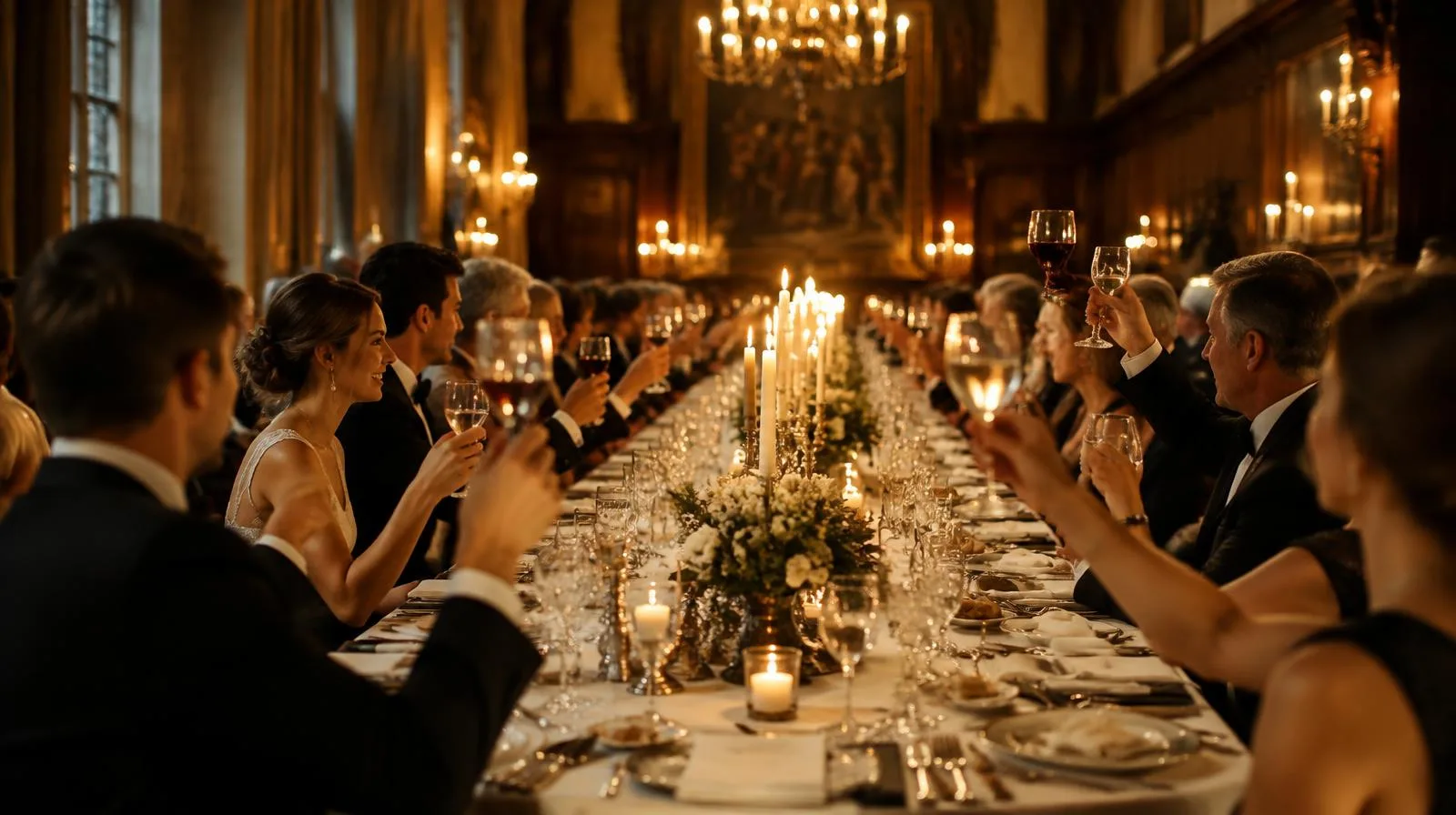
The evening need not end with the closing of the lodge. Where dining is offered, it can provide a welcome opportunity to exchange stories and get to know your hosts beyond formal proceedings. Arrangements are local, however. Do not assume that every meeting includes a banquet, that alcohol will be served, or that a dining invitation follows automatically from admission to the lodge.
Leave room for discovery rather than expecting a national performance of haggis, ceremonial drinking, choral singing, or late-night philosophical debate. Such expectations can turn particular customs into misleading generalizations. Ask what the evening includes and how long it is likely to last, especially if you must catch a train or return to a travel companion. Our guide to Masonic festive board and table lodge traditions offers further reading, but the host’s arrangements should govern your plans.
Confirm whether you need to reserve a meal, what it costs, how to pay, and whether dietary needs can be accommodated. Wythall Lodge, for example, distinguishes visiting from the cost of staying to dine, but that is a local example rather than a universal charging rule. Offer to settle any agreed charge promptly, and do not presume that an invitation includes complimentary dining.
It is also sensible to prepare a few gracious sentences in case you are invited to respond to a welcome or visitors’ toast. There is no need to assume that a particular officer must propose it or that the senior visitor always replies. Thank the Master and brethren, identify your home lodge if appropriate, and keep your remarks brief. Offer personal fraternal greetings without presenting yourself as an official representative of your Grand Lodge unless you have that authority.
Frequently Asked Questions About Visiting a Lodge Abroad
Can an Entered Apprentice or Fellowcraft travel to a lodge abroad?
Possibly, but eligibility depends on the jurisdictions involved, the degree in which the meeting will work, and the arrangements approved for that visitor. Some jurisdictions restrict visitation to Master Masons; that is not a universal international rule. Do not assume that routine business everywhere takes place in the Third Degree, or that joining an official delegation automatically removes restrictions. Tell your own secretary your degree and ask for a specific ruling before arranging attendance. The host must also confirm whether you can be received and what proof or accompaniment is needed.
What should I do if my Grand Lodge does not share mutual recognition with a local jurisdiction?
Do not arrange ritual visitation contrary to your Grand Lodge’s rules. Ask your own office to clarify the position if recognition is uncertain, and do not treat a personal invitation as permission to bypass it. Distinguish attendance at a tyled meeting from entering a building or lodge room during an authorized public visit. Cultural sightseeing may offer another way to explore Masonic heritage, but check both any relevant home-jurisdiction restrictions and the venue’s official public-access information. Consult official websites for current tours, opening hours, booking requirements, and admission charges.
Can my spouse or non-Masonic travel companion join any part of the visit?
Not the tyled ritual meeting, which requires the appropriate Masonic qualifications and admission checks. For any associated meal or social event, ask the host whether non-Masonic guests are invited. Do not infer access merely from a label such as festive board or White Table. If companions are welcome, confirm reservations, costs, dress, and timing for them as well. If not, arrange a separate activity and agree on a realistic meeting time afterward rather than leaving someone waiting outside without a plan.
How can I find accurate meeting dates and schedules when planning my itinerary?
Use official Grand Lodge information to begin your research, then confirm the particular meeting through the correspondence route your own jurisdiction permits. An old directory or a forum post may identify a useful lead, but it should not be your final confirmation. Ask about the date, venue, arrival time, meeting eligibility, dining arrangements, and any changes before departure. Keep the approved contact details available while traveling. A well-prepared visit leaves more room for fellowship and less for uncertainty at the door.
Sources
- Freemasons New Zealand: Visiting Lodges Overseas
- Grand Lodge of Pennsylvania: Recognition, Travel Commissions, and Correspondence
- United Grand Lodge of England: Foreign Grand Lodges and Recognition
- Grand Lodge of Maine: Visiting Other Lodges
- District Grand Lodge of Cyprus: Proving Visitors to a Lodge
- West Lancashire Freemasons: Lodge Dress Guidance
- Grand Lodge of California: The Many Masonic Rituals of Latin America
- Masonic Lodge: Organization, Degrees, and Visitation