If you stand amid the ruins of Kilwinning Abbey in Ayrshire, you are standing beside one of the most evocative settings in Scottish Masonic tradition. Travel east to Edinburgh’s New Town, and another threshold invites you into the early documentary history of the Craft. For Brethren drawn to these places, a compelling question follows: which institution can truly be called the oldest masonic lodge in the world? The answer requires care. A medieval origin story, an early surviving minute and a lodge still working today are different kinds of evidence. Exploring those distinctions makes this an extraordinary journey through Scottish history, stonecraft and fraternal devotion.
The Ancient Dispute: Minutes Versus Memory
The claims associated with Mother Kilwinning and the Lodge of Edinburgh (Mary’s Chapel) invite a comparison between tradition and documentation. Neither should be dismissed, but they should not be confused. A tradition can explain how a community understands its identity without proving the date of its foundation. A surviving minute establishes activity on a particular day, but does not necessarily tell us when a lodge began. Understanding that distinction adds depth to an essential entry on any Masonic travel bucket list.
At the center of the early documentary story stands William Schaw, Master of Works to James VI and Warden General. His statutes of 1598 and 1599 regulated the organization and conduct of operative masons. The second statutes, dated 28 December 1599, described Kilwinning as the “head and second lodge of Scotland” and recognized its supervisory authority over lodges in parts of western Scotland. The precedence associated with Edinburgh and Kilwinning later became a matter of controversy. These documents demonstrate established lodge organization by the end of the sixteenth century, not a proven twelfth-century foundation for either institution.
Mother Kilwinning was represented at the foundation of the Grand Lodge of Scotland in 1736. According to the Grand Lodge’s historical account, it withdrew in 1743, after seniority on the roll was assigned using the records lodges could produce. An agreement brought Kilwinning back into the Grand Lodge in 1807. Today it stands as Mother Kilwinning No. 0, while the Lodge of Edinburgh (Mary’s Chapel) is No. 1. Those designations are part of their institutional history, not a complete chronological verdict on the beginnings of Freemasonry.
Mother Kilwinning No. 0: Ayrshire’s Living Legend
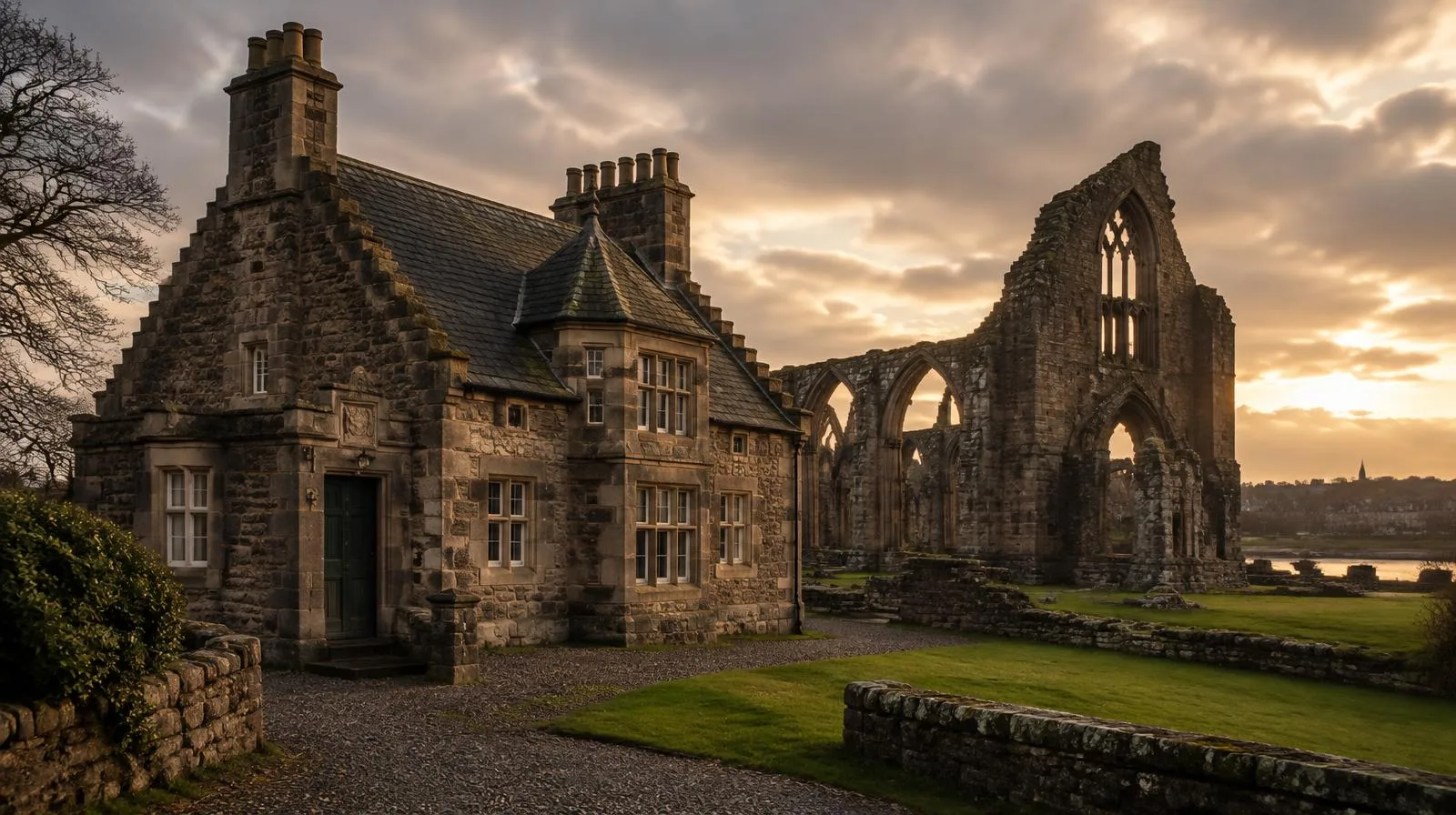
Kilwinning lies in North Ayrshire, southwest of Glasgow. Its abbey ruins provide a powerful setting for the lodge’s traditional account of its origins. Historic Environment Scotland dates the surviving ruins to the late 1100s, while its scheduled monument record places the foundation of the Tironensian abbey around 1162. The monks came from Kelso. According to lodge tradition, Mother Kilwinning traces its beginnings to the builders of the abbey. Its own history gives 1140 as the starting point, but that is a traditional claim, not an established foundation date for the surviving lodge.
The Grand Lodge of Scotland’s historical account is appropriately cautious: the lodge’s origin is uncertain, although it suggests a connection with the building of the monastery. That distinction matters. Medieval construction supplies a plausible setting for an operative community, but the abbey’s existence alone cannot establish an uninterrupted institutional lineage to the present lodge. The romance of the place needs no invented certainty. Let the ruins evoke the builders, while allowing the documents to speak within their limits.
The present Mother Lodge building, with the abbey ruins behind it, was consecrated in 1893. The lodge’s history describes an earlier hall built in 1779 at the entrance to the abbey, later replaced by the current premises nearby. It is therefore misleading to imagine the modern lodge room as a surviving medieval interior. A thoughtful study of lodge room architecture and symbolism can enrich a visit, but the building’s own nineteenth-century history deserves attention alongside the older tradition it commemorates.
Mother Kilwinning’s museum offers a more tangible encounter with its heritage. The lodge welcomes both Masons and non-Masons to arrange visits. Its published collection highlights include a silver seal used for issuing charters and an old Masonic charge book dated by the lodge to 1671-1675. North Ayrshire Heritage also describes jewels, gavels, glassware, banners, regalia and furniture from the earlier lodge building. Ask what can be viewed during your visit rather than assuming that particular manuscripts or objects will be available. These survivals are compelling enough without attributing unrelated archery trophies or an undocumented inventory to the collection.
Mary’s Chapel No. 1: The World’s Oldest Continuous Minutes
The familiar claim suggested by this heading needs an important qualification: Mary’s Chapel possesses the oldest surviving minute of a Masonic lodge that is still operating, rather than the oldest Masonic minute of any lodge. Nor does the age of its earliest minute, by itself, prove an uninterrupted sequence of meetings or records. Its documentary distinction is remarkable without either additional claim.
The Lodge of Edinburgh (Mary’s Chapel) No. 1 meets at 19 Hill Street in Edinburgh’s New Town. Its name comes from the former chapel in Niddry’s Wynd, not from its present building. According to the lodge’s own premises history, the chapel and wynd were demolished in 1787. The lodge subsequently met in several locations before purchasing 19 Hill Street in 1893. The current address is a later chapter in a much longer institutional story.
The earliest surviving Edinburgh lodge minute is dated 31 July 1599. An earlier Masonic minute survives from Aitchison’s Haven, dated 9 January 1599, so Edinburgh’s record should not be described as the oldest anywhere in existence. The Edinburgh minute concerns George Patoun’s employment of a “cowan” to work on a chimney and the lodge’s response to that offense. It offers a specific glimpse of operative regulation, rather than evidence for every aspect of craftsmen’s working lives.
John Boswell, Laird of Auchinleck, signed and placed his mark on the record of a meeting at Holyrood on 8 June 1600. His presence is significant, but his status at that meeting is uncertain. It should not be presented as a documented initiation. The lodge’s own historical summary instead points to the admission of Lord Alexander, Sir Anthony Alexander and Sir Alexander Strachan in 1634 when discussing its early non-operative members.
Inside Hill Street, the documented architectural history is more useful than an imagined timeless interior. The lodge purchased adjoining property at 17 Hill Street in 1911, and alterations in 1924 included the installation of oak panelling in the lodge room. These changes remind the visitor that an old institution can occupy and adapt a newer home. For that reason alone, Mary’s Chapel is a rewarding stop on a Masonic history tour of Scotland.
Walking in the Footsteps of the Operative Masters
To appreciate No. 0 and No. 1, look beyond the lodge room furniture and consider the work of building. The Scottish statutes and lodge records provide substantial evidence for connections between operative stonemasonry and later Freemasonry. They do not, however, establish a simple, uniform transformation lasting exactly two centuries. The admission of non-operative members is one documented part of a more complicated development.
Travelers interested in reading stonemasons’ marks on cathedrals can approach Kilwinning Abbey with an observant eye, but should avoid treating every incision as an identifiable mason’s signature. The evidence supplied for this site does not establish a catalogue of particular geometric marks at particular walls or doorways. Nor does it demonstrate that a mark on an abbey stone can be matched to an individual in the Edinburgh minutes. Such connections require specialist evidence, not resemblance alone.
There is plenty to study without that leap. Historic Environment Scotland identifies the south transept, south nave wall with its east processional doorway, and parts of the west front among the best-preserved remains. Its account describes changes in masonry and several building operations. Follow those architectural clues, consult the site interpretation, and distinguish what can be observed from what must be inferred. The pleasure of historical travel lies partly in learning to ask better questions of the stone.
The records of Scottish lodges bring the discussion back to people: their organization, their working obligations and, later, their acceptance of members who were not operative masons. This is a firmer foundation for appreciating the Craft’s history than claiming an unbroken symbolic chain from every medieval carving to modern tracing boards.
Hospitality and Harmony: The Scottish Masonic Tradition
A pilgrimage to Scotland need not be solely about parchment and ruins. These are living lodges, and a properly arranged visit may offer an opportunity to meet the Brethren who preserve their histories. Approach that possibility as a guest, not as a customer purchasing an experience. Neither a meeting invitation nor a particular social program should be assumed from a lodge’s reputation.
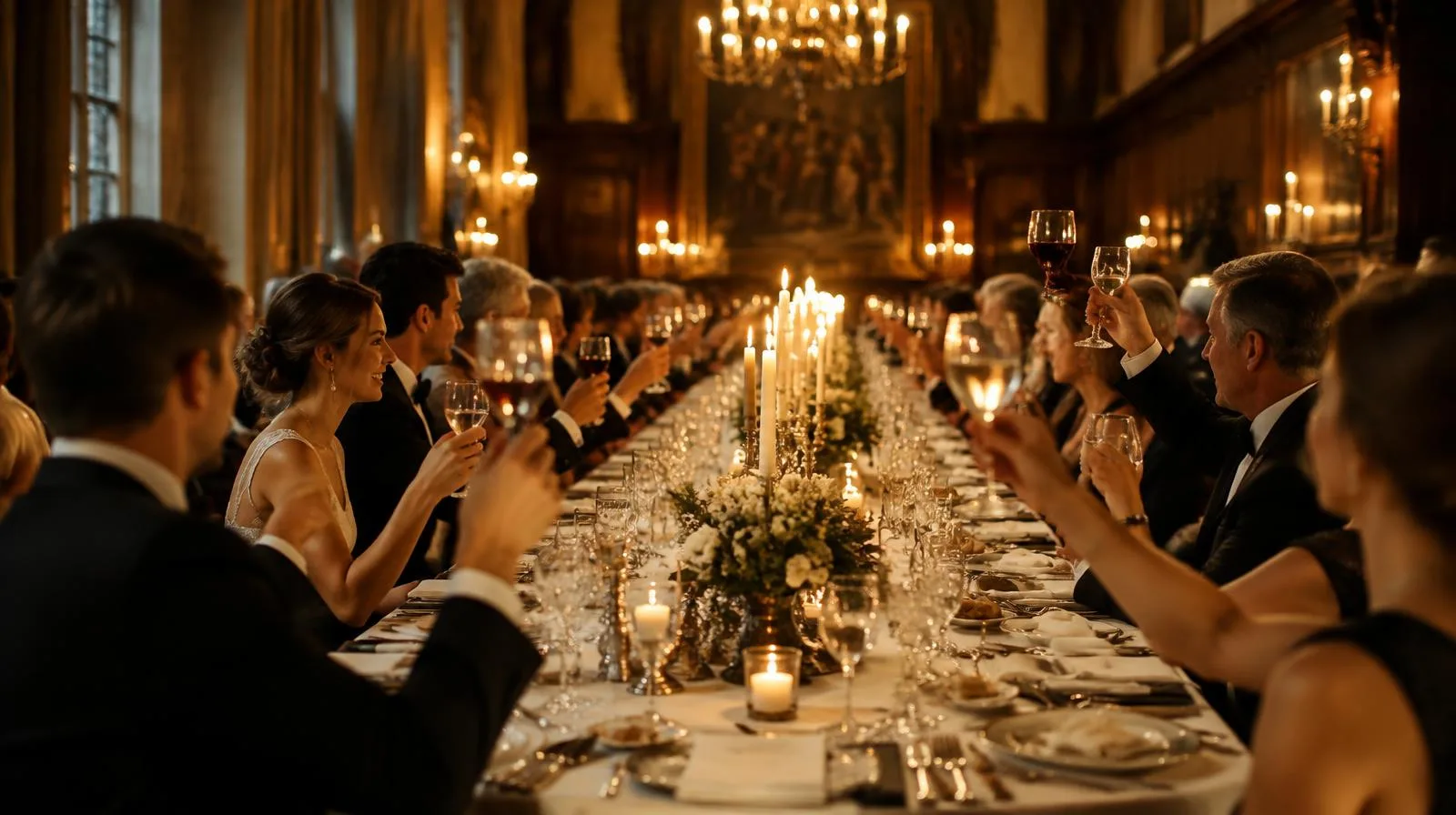
Scottish Masonic social gatherings are often described as Harmony. If one forms part of your visit, let the hosts explain its customs. Songs, toasts and refreshments may feature, but no particular menu, drink or ceremony should be promised. Our survey of festive board and table lodge traditions provides useful context, not a fixed program for either lodge. The best preparation is an open mind and a willingness to follow local practice.
The Grand Lodge of Scotland describes brotherhood, charity, integrity and personal development among its core values. Those provide a better guide to the spirit of a visit than picturesque assumptions about tartan, haggis or whisky. Leave room for conversation about the lodge as it is today, as well as the history that brought you to its door.
Planning Your Pilgrimage to Scotland’s Oldest Lodges
Thoughtful preparation is essential. A public heritage visit and attendance at a lodge meeting are different arrangements. Tiled meetings are not public tours, and a visitor’s eligibility must be established through the appropriate Masonic procedures. Before booking travel around either lodge, confirm the purpose of your visit, the available dates and any conditions of admission. Do not assume that a published address means unrestricted access.
Timing and Itinerary
Consider allowing four or five days as a comfortable itinerary suggestion, rather than a required duration. Edinburgh can serve as a base for Mary’s Chapel and an inquiry about tours at Freemasons’ Hall, 96 George Street. The Grand Lodge lists tours among the responsibilities of its reception and shop team. Confirm availability directly, especially if a particular collection or historical document is central to your plans.
Allow a separate day for Kilwinning and its abbey, subject to confirmed lodge access. Rail journeys between Edinburgh and Kilwinning can involve a connection in Glasgow. Check the precise stations and transfer arrangements before choosing a service. Rather than relying on a fixed journey time, consult ScotRail’s current journey planner and live information. For driving, use current route information and allow for traffic, parking and the timing of your appointment.
Visiting Credentials and Etiquette
If you intend to attend a meeting, begin with your own lodge secretary or Grand Lodge and establish the applicable recognition and visitation requirements. The Grand Lodge of Scotland lists overseas visitation inquiries among its administration department’s responsibilities. Our guide to international Masonic visitation protocol can help you frame your questions, but the relevant authorities and host lodge should confirm the documents and procedures required for your circumstances.
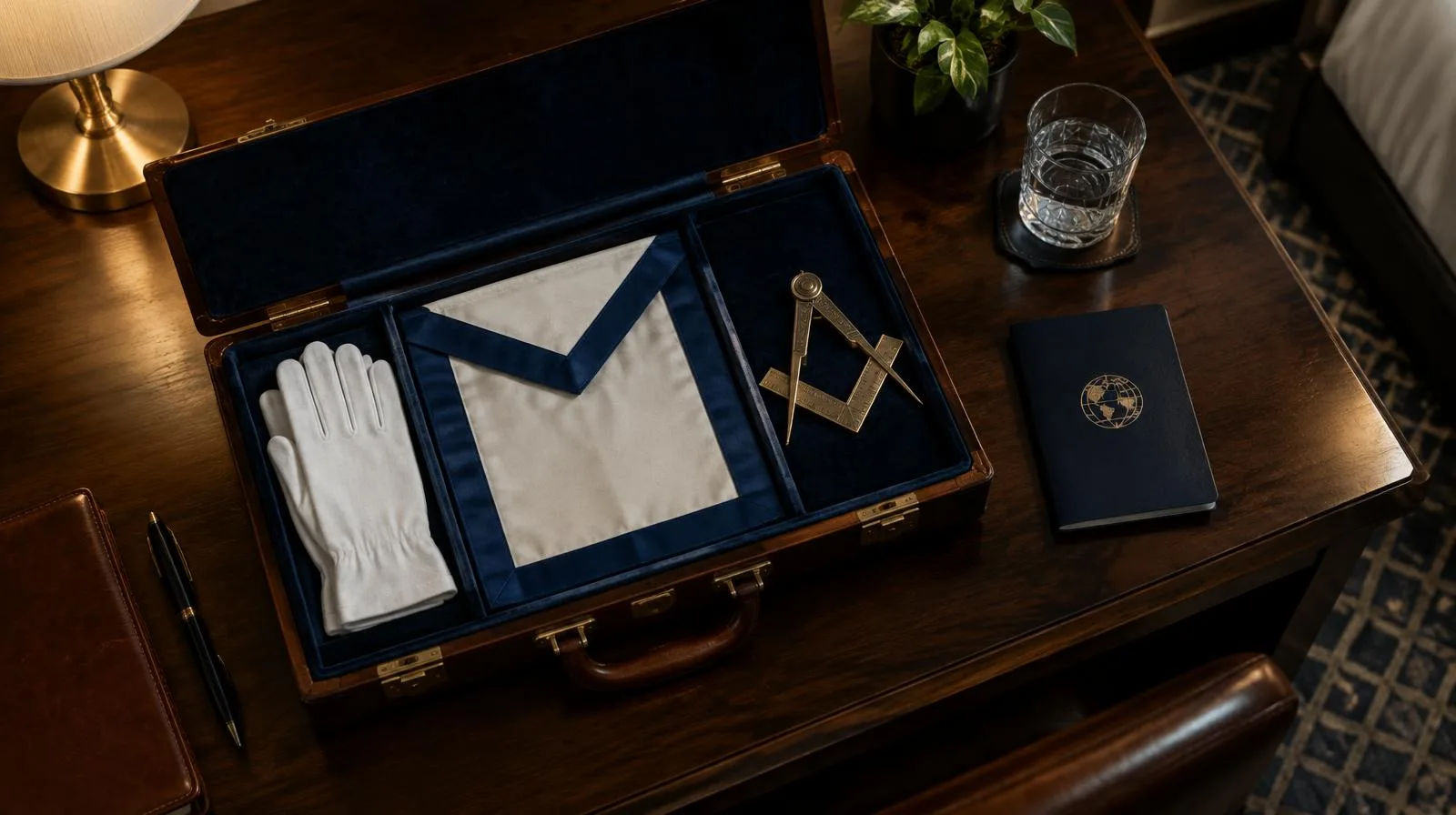
Ask about dress and regalia before packing. Scottish lodges retain distinctive practices, and there is no reason to assume that every member wears tartan or that one visitor dress code applies to every occasion. Bring the regalia your hosts and home jurisdiction advise. For practical protection in transit, consult our guide on how to travel with Masonic regalia, particularly if your apron or other items require careful handling.
Museum and Non-Member Access
Mother Kilwinning explicitly welcomes Masons and non-Masons to its museum and asks visitors to arrange lodge and museum tours through its secretary. Treat that as an appointment-based visit and confirm current arrangements directly. For Mary’s Chapel, inquire through the lodge’s official website about any public access available during your stay. Do not assume a regular tour service or a particular open-day program without confirmation.
In Edinburgh, Freemasons’ Hall offers another avenue for exploring Masonic heritage. Contact the Grand Lodge about current tours and what they include. Readers planning a wider journey can also explore our guide to the greatest Masonic libraries and museums. Wherever you go, distinguish an ordinary tour from research access: permission to enter a building does not automatically include permission to consult original records, handle objects or take photographs.
Frequently Asked Questions
Which lodge is truly the oldest masonic lodge in the world?
The evidence does not establish one uncontested answer. Mary’s Chapel has the oldest surviving minute of a lodge still operating, dated 31 July 1599. Aitchison’s Haven has an earlier surviving minute, dated 9 January 1599. Mother Kilwinning traces its origins to medieval abbey builders according to lodge tradition, but its precise foundation date is uncertain. Its designation as No. 0 does not prove a twelfth-century origin.
Can non-Masons visit Mother Kilwinning and Mary’s Chapel?
Mother Kilwinning expressly welcomes non-Masons to arranged museum and lodge tours. Contact its secretary before traveling. For Mary’s Chapel, ask the lodge directly what public access, if any, is available on your proposed dates. A heritage visit does not confer admission to a tiled meeting, and neither building should be treated as an unrestricted walk-in attraction.
What attire is expected when attending a meeting as a visiting Brother?
Ask the host lodge to confirm the dress code for the particular meeting or event, together with its advice about visiting regalia. Do not assume that business dress, black tie or Highland dress is universally required. Your home lodge or Grand Lodge can also advise on the appropriate regalia and any visitation requirements relevant to your constitution.
How much time should I budget to see both lodges?
Three or four days can be a useful starting plan, with extra time if you want a more leisurely visit. Consider two days in Edinburgh and a separate day for Kilwinning, but secure appointments before fixing the itinerary. Seeing both buildings is not the same as attending meetings at both lodges, so allow your confirmed arrangements to determine the schedule.
Sources
- Grand Lodge of Scotland: Lodge Mother Kilwinning No. 0, archived history
- Historic Environment Scotland: Kilwinning Abbey history and surviving architecture
- Mother Kilwinning: The lodge room and the 1807 agreement
- Mother Kilwinning: Museum collections and arranged visits
- Lodge of Edinburgh: Early minutes and non-operative admissions
- Lodge of Edinburgh: Mary’s Chapel and Hill Street premises history
- Grand Lodge of British Columbia and Yukon: Edinburgh’s 1599 minute and its transcription
- Grand Lodge of Scotland overview: Aitchison’s Haven records and Scottish lodge autonomy