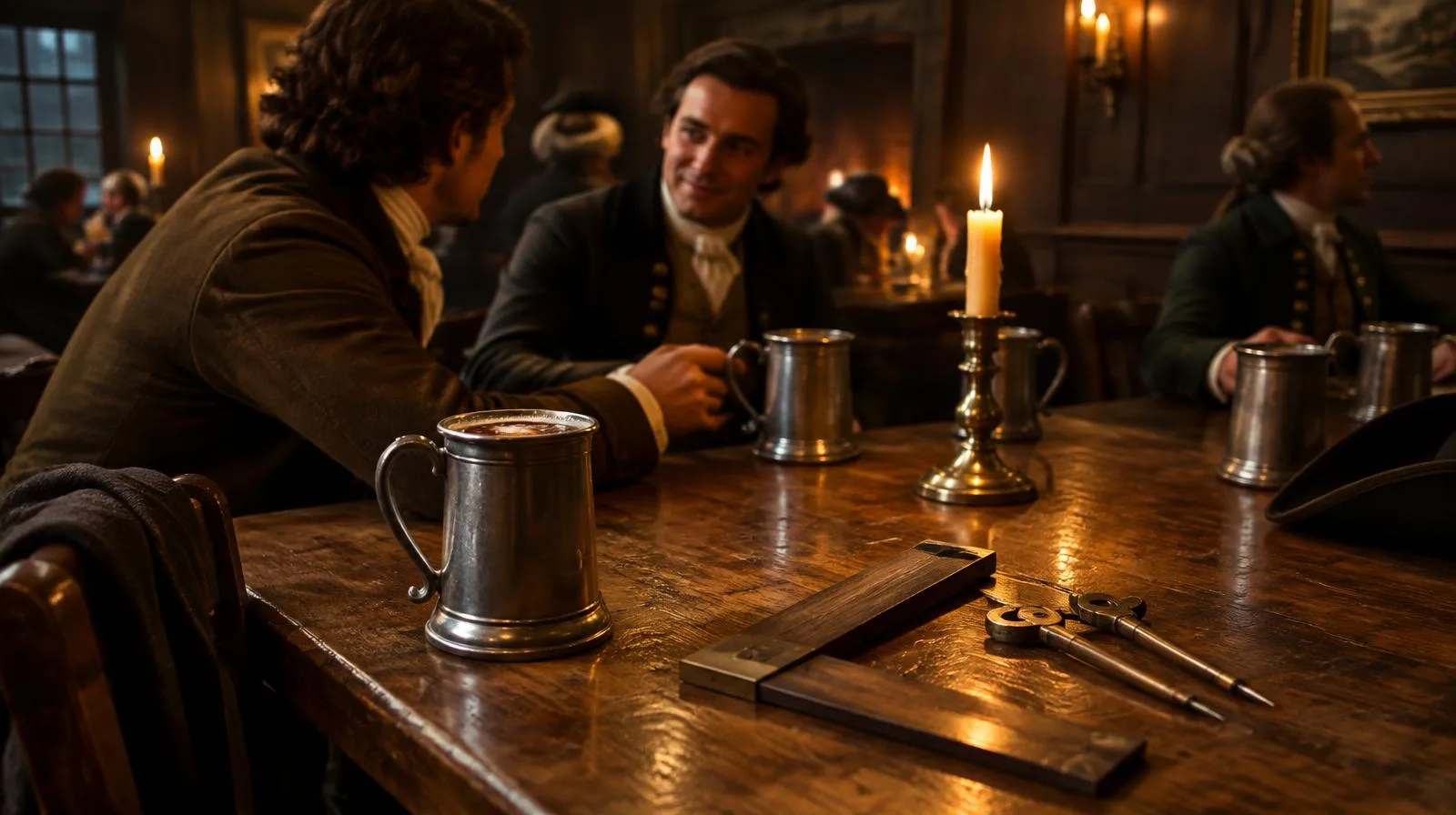
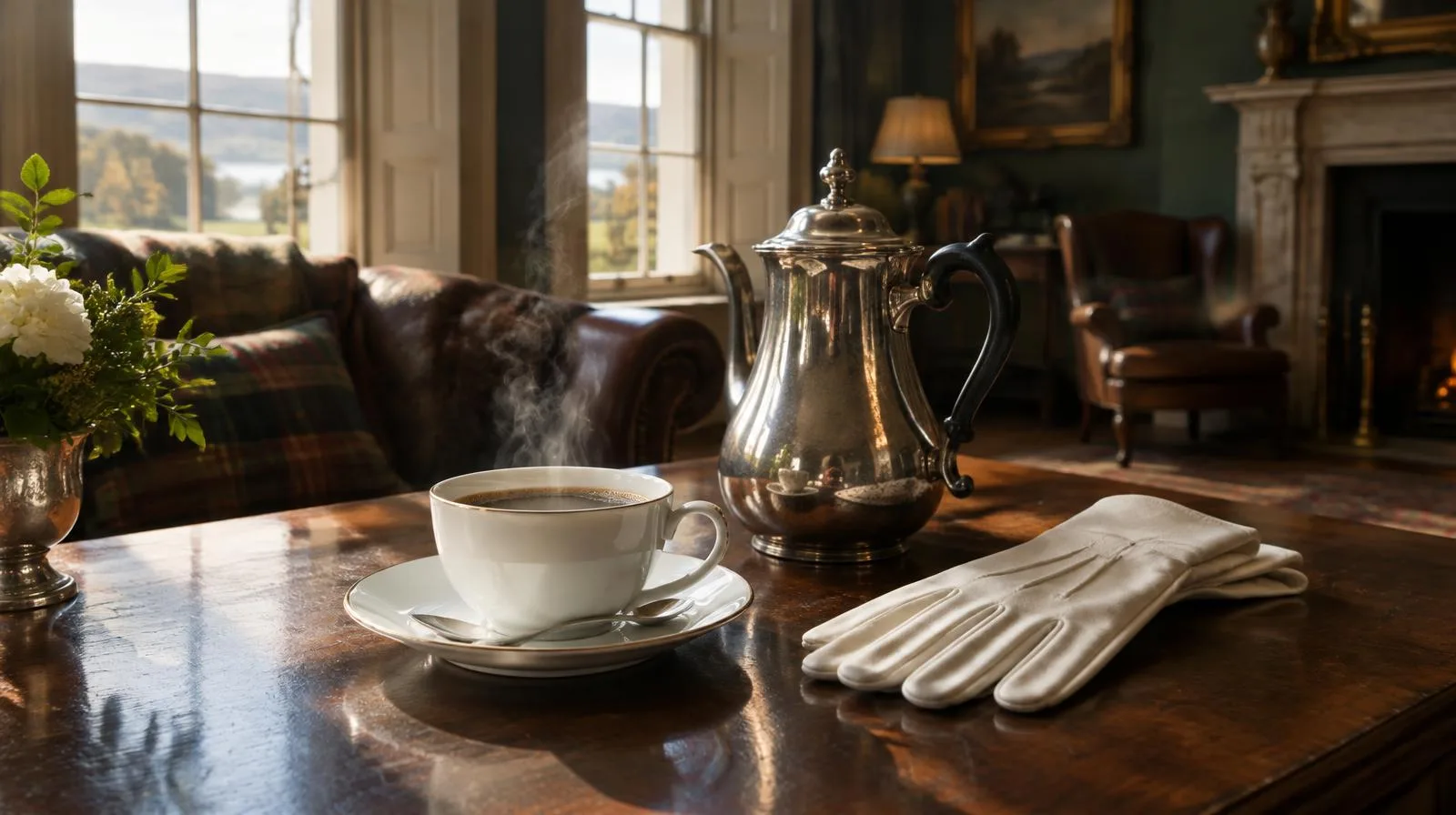
Picture a cup cooling beside an empty chair while the conversation carries on. The history of freemasonry and coffee begins with something less comfortable than this familiar scene: coffee-houses accused by a king of spreading reports against his government. Some of these establishments would also provide meeting places for lodges. The apparently harmless cup has a surprisingly political backdrop.
But this is not a tale of a forbidden Masonic drink finally winning respectability. It is a story of meeting rooms, changing refreshment customs and the pleasure of having somewhere to talk. Follow the documents and you find coffee beside formal banquets, coffee-house ancestry beside champagne, and fellowship that refuses to fit a tidy history of abstinence.
Why were coffee-houses politically suspicious?
Official suspicion is documented, not merely inferred from lively conversation. In 1675, Charles II issued a proclamation for the suppression of coffee-houses. It accused their customers of wasting time and their gatherings of spreading false and scandalous reports that damaged his government and disturbed the peace.
The proclamation sought to suppress public coffee-houses and the retail sale of coffee, chocolate, sherbet and tea for consumption on the premises. Its concern was therefore broader than coffee itself. The political danger, as the Crown presented it, lay in people assembling and exchanging information. That allegation records the government's attitude, not proof that every customer was seditious.
Nor should the order be mistaken for a lasting closure. A Princeton University Press account describes its rapid withdrawal in the face of opposition, with licensing restrictions preserving some royal authority. The episode gives real substance to coffee's suspicious reputation, while warning against turning a suppression attempt into a permanent ban.
For Masonic history, this is context rather than a settled origin story. UGLE's historical overview acknowledges uncertain beginnings and identifies medieval stonemasons as the roots favoured by many scholars. Read the neighbouring story of chocolate-houses, coffee and gentlemen's clubs in that spirit: shared settings invite investigation, not automatic claims of descent.
The title's contrast between suspicious and safe is social shorthand, not a medical judgement or a documented ranking of lodge beverages. Royal hostility towards coffee-house conversation and later Masonic enjoyment of coffee are different episodes. The evidence connecting them deserves more care than a simple story of prohibition followed by acceptance.
Did Masonic lodges really meet in coffee-houses?
Yes, and named examples are more revealing than a romantic picture of an entire coffee-drinking brotherhood. The United Grand Lodge of England's account of British Lodge No. VIII identifies its first recorded meeting place as Tom's Coffee House in London's Clare Market. Here the coffee-house was not merely part of the surrounding social scene: it accommodated the lodge itself.
There is a Scottish example too. Adam Muir Mackay's history records the constitution in 1738 of the lodge later named St. David, Edinburgh. Its first meetings were held at the Laigh Coffee House in the Canongate. When planning a Masonic history journey through Scotland, keep these less monumental meeting places in mind alongside purpose-built halls.
These examples qualify the tavern story rather than overturn it. The Museum of Freemasonry explains that early lodges were often identified by the taverns where they met. A surviving summons calling brethren to the One Tunn in the Strand contains a corrected venue, which the museum interprets as evidence of a change in meeting place.
The history of Freemasonry and beer therefore belongs beside the coffee story. For the traveller researching an old address, the useful questions are specific: which lodge met here, when, and what document records it? A venue name is a starting point. To reconstruct what members actually drank, look for menus, accounts or descriptions of particular occasions.
British Lodge supplies an enjoyable example. The same official account that records its coffee-house beginnings describes its historical taste for champagne and a champagne reception at its anniversary celebration. Coffee-house ancestry and later enjoyment of wine sit together quite comfortably in this lodge's recorded history.
Did temperance replace lodge beer with coffee?
The tempting version runs neatly: tavern origins, temperance, coffee urn. Douglas Franklin's survey of alcohol and Freemasonry identifies a reaction against alcohol in some Masonic quarters. That is a useful starting point, but a history of particular reactions requires particular places and rules, rather than an assumed worldwide change.
Coffee also appears simply as part of an elegant meal. Aimee E. Newell's study of Masonic banquets describes the November 1910 celebration of California Lodge No. 1 in San Francisco. Its printed menu ended with sweets and black coffee. This is firm evidence of coffee at a Masonic celebration, without requiring us to interpret dessert service as a declaration of temperance.
Thomas E. Weir offers a contrasting view in his essay, The Mystery of Masonry. He describes a typical American lodge serving non-alcoholic refreshments after closing, then recounts London lodge dinners where wine was served. These are his observations, not a current rulebook for either country. Nevertheless, the contrast makes local experience an unreliable guide to everyone's customs.
Restrictions need equally careful reading. California's 2026 lodge budgeting guidance prohibits spending lodge funds on alcoholic beverages. The wording concerns expenditure. A visitor asking what may be served at a particular event needs the applicable event rules as well, rather than treating a financial restriction as a complete answer.
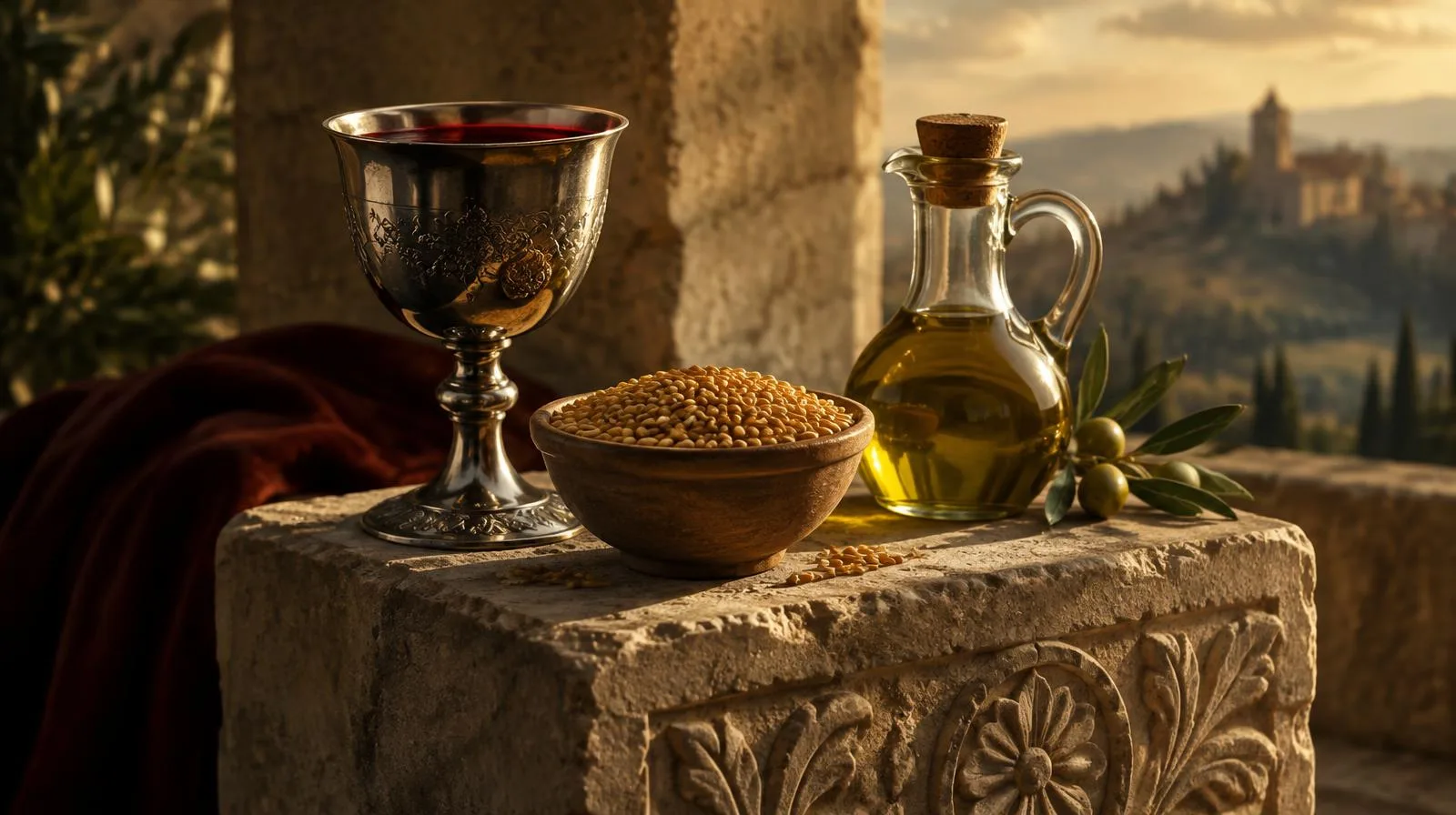
Keep ceremonial symbolism separate from dining arrangements, too. Franklin discusses wine's ritual and ceremonial significance alongside its social history. The subjects meet in the traditions of the festive board and table lodge, while corn, wine and oil belong to a symbolic vocabulary that cannot be reduced to a dinner menu.
How coffee keeps Masonic conversation alive
A modern example makes the story more personal. In his account of the Masonic Café, Dan Bergen of Kamloops Lodge No. 10 describes joining an informal gathering of brethren in the winter of 2022. Their conversations repeatedly turned towards Freemasonry. As others joined, the original venue became restrictive in space and privacy.
Bergen suggested moving into the banquet area of the Kamloops Masonic Centre. The coffee gathering then developed in structure and scope. His surveys of lodge members identified fraternity and the social side of lodge life as leading reasons for their involvement, at a time when he felt pandemic isolation had weakened their closeness.
The purpose was not simply to provide another refreshment service. Bergen describes an opportunity for social interaction, thoughtful discussion and Masonic education. Coffee gave the gathering an informal shape, while the move provided room for it to develop. The account is valuable because it explains what these particular brethren hoped to achieve.
Set beside the royal proclamation, the contrast is striking: one document presents gathering and conversation as a threat, while the other treats them as a way to rebuild fellowship. This is an editorial comparison, not evidence of an unbroken institutional tradition. The human activity, spending time together over refreshments, is what makes the comparison compelling.
Where can travellers explore this history today?
Start with Freemasons' Hall in London, where the Museum of Freemasonry is at 60 Great Queen Street. The museum welcomes everyone, including visitors who are not Freemasons, and publishes free admission. Check before you go for current opening arrangements, gallery access and any separate requirements for tours or research.
The most revealing survivals are not necessarily cups. The museum's account of lodge summonses shows how modest printed documents preserve meeting places and alterations. Ask whether material relating to tavern meetings or lodge dining is currently displayed. Its discussion of the One Tunn summons establishes a collection item, not a promise that you will see it on your visit.
For research, prepare lodge names and former meeting places in advance. The museum recommends Lane's Masonic Records, while warning that Georgian addresses can be frustratingly imprecise. Keep a distinction in your notes between a documented historical location and an accessible surviving building. For a wider itinerary, consider Masonic libraries and museums alongside street-level exploration.
The museum's food-and-drink page offers an apt concluding stop: it lists coffee, tea and beer at the public café inside Freemasons' Hall. Check before you go, as facilities and offerings may change. At this modern address, at least, coffee and beer share the same refreshment arrangements.
Attending a lodge requires separate preparation from visiting a public museum. Consult international Masonic visitation protocol and confirm arrangements through the appropriate Masonic channels. Ask your hosts about dining and refreshments rather than assuming your home customs apply. The practical lesson of these varied accounts is to arrive curious, not certain.
Frequently asked questions
Was coffee ever banned in Masonic lodges?
The documented suppression attempt discussed here was Charles II's action against public coffee-houses, not a Masonic regulation. The lodge histories instead provide positive examples of meetings in coffee-houses. Any claim of a lodge ban would need a specific rule and jurisdiction.
Which lodges met in coffee-houses?
British Lodge No. VIII first appears meeting at Tom's Coffee House in London's Clare Market. The lodge later named St. David, Edinburgh, held its first meetings at the Laigh Coffee House in the Canongate.
Is coffee the official drink of Freemasonry?
The examples here document coffee as banquet refreshment and a focus for informal fellowship, rather than an official appointment. For a particular lodge's arrangements, ask its hosts and consult the relevant local rules.
Did all lodges stop serving alcohol after temperance?
No. Weir recounts wine at London lodge dinners, and UGLE records champagne at British Lodge's anniversary celebration. These examples show why restrictions in one setting should not be treated as worldwide abstinence.
Sources
- University of Michigan Library: Charles II's coffee-house suppression proclamation
- United Grand Lodge of England: British Lodge and Tom's Coffee House
- Grand Lodge of British Columbia and Yukon: St. David and the Laigh Coffee House
- Masons of California: Masonic banquets and a 1910 coffee service
- The Masonic Trowel: Thomas E. Weir on refreshment customs
- Grand Lodge of British Columbia and Yukon: Dan Bergen's Masonic Café
- Museum of Freemasonry: lodge summonses and historical meeting places
- Museum of Freemasonry: public access and visitor arrangements
- Museum of Freemasonry: public refreshments at Freemasons' Hall