A monumental doorway can make even a confident traveller hesitate. Is this a museum entrance, a private headquarters, or somewhere you need an invitation? For anyone seeking masonic halls open to the public, London offers a reassuring answer: behind the doors of Freemasons’ Hall, the Museum of Freemasonry welcomes everyone, with no admission charge.
The more interesting question is what lies beyond that welcome. Perhaps you want to stand beneath the Grand Temple’s mosaics, see an apron associated with Robert Burns, or trace a name through an old minute book. Those ambitions call for different arrangements. London offers free museum entry and paid public tours; Edinburgh welcomes anyone on free guided tours; Malta’s library offers a collection worth enquiring about before you commit to a visit.
Can non-Masons visit Masonic halls?
Yes, where a public visitor programme exists. London’s Museum of Freemasonry explicitly says that you do not have to be a Freemason to visit. The Grand Lodge of Scotland says its museum tours are available to anyone. These are public invitations, not visits reserved for members.
Keep museum browsing, guided tours and research appointments separate when planning. London illustrates the distinction neatly: its museum is free, its public tour page lists paid tours, and its library asks visitors to register to see books. The Kent Room, an active lodge room within the museum route, is described as being for viewing only.
If your aim is to attend a lodge meeting, enquire specifically about that rather than relying on museum visitor information. For that separate planning task, turn to international Masonic visitation protocol. When browsing Masonic libraries and museums, make the same practical distinction: decide whether you want an exhibition, an architectural visit or access to research material before contacting the host.
Freemasons’ Hall, London: free museum entry and guided tours
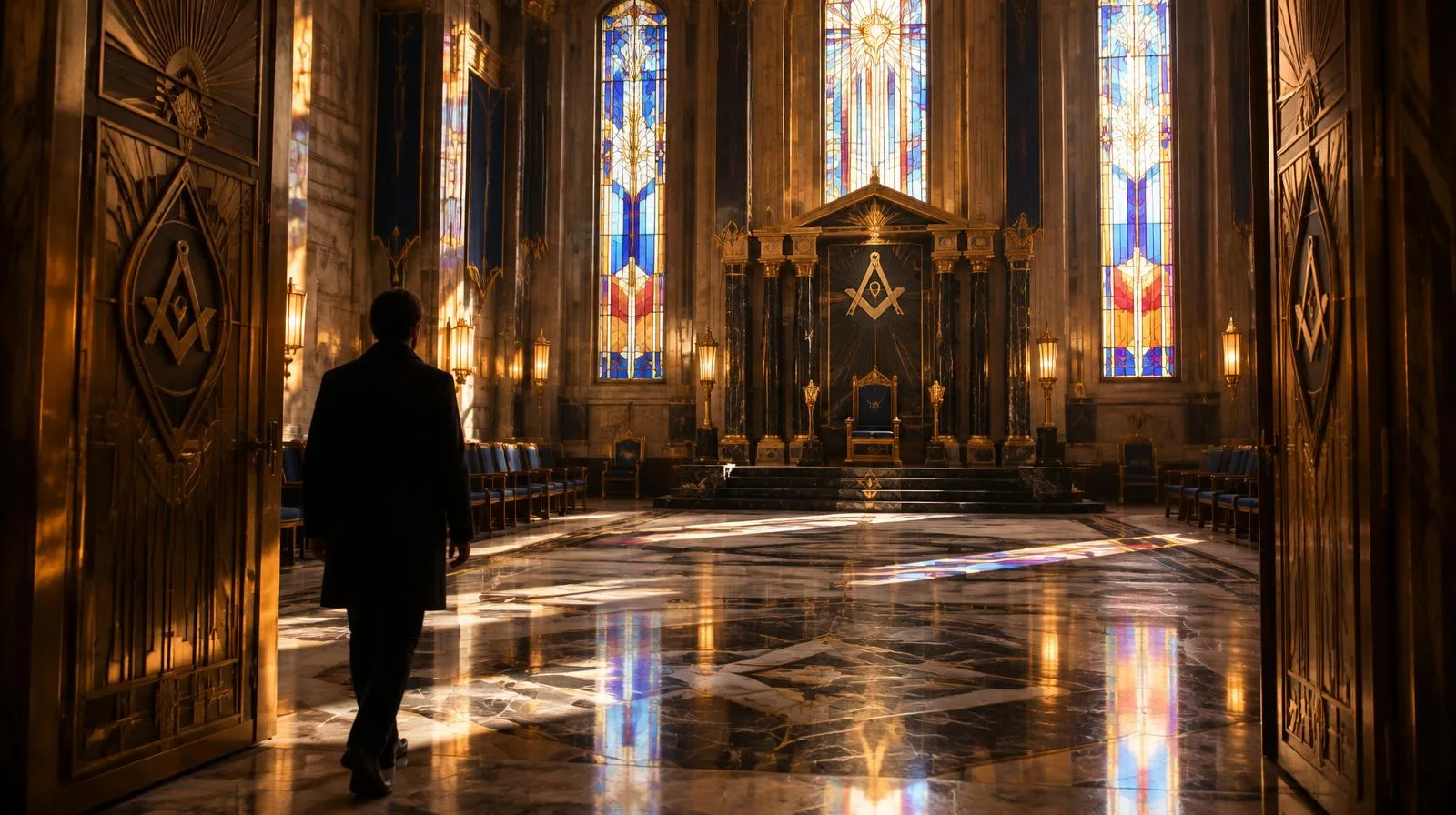
At 60 Great Queen Street, Freemasons’ Hall combines the headquarters of the United Grand Lodge of England with a public museum. The present building was constructed between 1927 and 1933 as a memorial to Freemasons who died in the First World War. Its Art Deco architecture makes the building itself part of the encounter, not merely a container for exhibits.
- Can non-Masons enter? Yes. The museum is open to everyone. Staff at the ground-floor information desk can direct you to the museum on the first floor.
- What does it cost? Museum entry is free. The public tour page lists guided tours from £14 per person. Check the price for your chosen tour before booking.
- When is it open? Published museum hours are Tuesday to Saturday, 10am to 5pm, with public holiday and Easter weekend closures. The Library and South Gallery close from 1pm to 2pm daily and all day Saturday. Public tours are advertised at 11am and 2pm, Tuesday to Saturday, subject to bookable availability.
- Can you take photographs? The museum welcomes photographs of its galleries and exhibits, but asks visitors not to photograph or film staff. Ask separately about photography elsewhere in the hall.
Choose the tour carefully. The Grand Temple tour is advertised as an approximately 55-minute visit beginning in the museum before continuing into ceremonial areas. Its intended highlights include the Grand Temple’s mosaics, organ and stained glass. The museum-focused tour offers a different emphasis, with visits to active lodge rooms included where possible.
The official tour information is explicit about the limitation: this is a working building, routes can change at short notice, and particular rooms cannot be guaranteed. If the Grand Temple becomes unavailable, the advertised alternative is a visit to other spaces. Book with that possibility in mind.
For an independent visit, start at the North Gallery, then follow the available museum route. The restored Art Deco Library sits between the North and South Galleries. Because those spaces have their own closures, check the museum’s visitor timetable, especially if books rather than ceremonial architecture are your main interest.
Continue your reading with Freemasons’ Hall London, or pair the indoor visit with the London Masonic pub crawl. Keep the booked hall visit as the fixed point of your day, leaving the surrounding exploration flexible.
Grand Lodge of Scotland, Edinburgh: free tours and the Burns apron
At 96 George Street, the Grand Lodge of Scotland offers a guided introduction to its museum collection. Its public invitation is straightforward: anyone may attend, and the tours are free. Volunteer availability, however, matters more than a visitor might expect from the phrase “daily tours”.
- Can non-Masons enter? Yes. Tours are available to anyone. A drop-in service is offered, but booking is preferred to ensure that a guide is available.
- What does it cost? The guided tours are free.
- When can you visit? Tours do not run at weekends or on public holidays and are subject to volunteer availability. Confirm the actual tour time when booking, rather than planning around general contact hours.
- Can you take photographs? Ask when booking, and check with your guide before photographing rooms or exhibits.
The object many visitors will particularly want to see is the apron identified by the Grand Lodge as Robert Burns’s original Masonic apron. Its announcement of research into Burns and Freemasonry states that the apron is displayed in the museum. If this is your principal reason for travelling, ask whether it will be on view on your chosen date.
Attribution deserves care. Reporting in The Sunday Times in 2009 described competing claims concerning Burns-associated aprons. It also quoted the Grand Lodge’s curator explaining that its apron had been stabilised, rather than restored to its original condition. The careful description is therefore the conserved apron identified by the Grand Lodge as Burns’s, not an object whose entire history should be taken for granted.
That distinction enriches the visit. Ask what supports the attribution, how the object reached the collection, and what conservation has preserved. A display becomes more memorable when you understand the evidence behind its label, rather than simply recognising a famous name.
For a longer journey, consider the Robert Burns Masonic trail alongside a Scottish Masonic history itinerary. Confirm the George Street tour first, particularly if you have only one weekday available in Edinburgh.
Malta Masonic Library: enquire before visiting Marsamxett
The Malta Masonic Library identifies itself as part of the Library and Museum of the Masonic Hall at 6 & 7 Marsamxett, Valletta. Its website welcomes online visitors to browse the catalogue. For a physical visit, make a direct enquiry your first step rather than treating a catalogue entry as an appointment.
- Can non-Masons visit? Ask whether a visit by a non-Mason can be arranged, explaining whether your interest is sightseeing or research.
- What would it cost? Request confirmation of any admission or research charges when discussing the visit.
- When could you come? Ask for an agreed date and time before travelling specifically to the hall.
- Can you take photographs? Ask separately about interiors, displays and documents, describing the intended use of any images.
The documented holdings give good reason to enquire. The library’s own description divides its collection into archives, books and Masonic publications. The archives contain old minute books dating from 1815, alongside other records and documents relating to Freemasonry in Malta. The publications section includes a full collection of Ars Quatuor Coronati.
Use the catalogue to sharpen your request. It allows searches by title or author, and browsing by subject tags. If you are pursuing a particular lodge, person or period, say so, then ask which material might be available for consultation and under what conditions. Request permission before planning to handle or photograph originals.
For the broader journey, turn to Masonic Malta, but keep this particular stop provisional until arrangements are confirmed. An enquiry is not a verdict that the door is closed; it is the sensible way to discover what kind of welcome can be arranged.
How to plan a Masonic hall visit without surprises
Choose the experience before choosing the time slot. Architecture calls for a question about rooms; a treasured object calls for confirmation that it is displayed; research calls for a precise description of the material you hope to consult. “Is the building open?” is rarely the most useful question on its own.
Bring an architectural question as well as a camera. In London, the building’s Art Deco character is an obvious starting point. For a separate reading theme, consider Egyptian Revival Masonic temples, while letting the guide or the building’s own interpretation explain what you actually see.
- Check before you go. Reconfirm closures, booking availability and any changes to the planned route.
- Separate admission from tours. London’s free museum entry and paid public guided tours are different options.
- Describe access needs. Ask about the route you intend to take. London lists automatic entrance doors, an accessible lift, accessible toilets and wheelchairs.
- Explain photographic intentions. A holiday photograph, document research and a professional shoot merit different questions.
The practical verdict: London offers free museum entry with optional paid tours; Edinburgh offers free guided visits subject to availability; Malta merits an enquiry tailored to your interests. Plan around the welcome actually offered, and the imposing doorway becomes considerably less daunting.
Frequently asked questions
Do you need to be a Freemason to visit?
No, not for London’s Museum of Freemasonry or the Grand Lodge of Scotland’s public museum tours. Both welcome non-Masons. Ask the Malta Masonic Library directly about arranging a physical visit.
Can you see London’s Grand Temple for free?
The advertised public Grand Temple tour is among the paid tour options, with public tours listed from £14. Museum admission is free. Check the current booking details and remember that access to particular rooms can change.
Is Robert Burns’s apron on display in Edinburgh?
The Grand Lodge says that the apron it identifies as Burns’s original Masonic apron is displayed in its museum. Confirm its availability when booking if it is the main reason for your visit.
Can you inspect Malta’s minute books from 1815?
The library confirms that its archives contain minute books dating from 1815. Ask whether the material relevant to your research can be consulted, and obtain agreement before planning a research visit.
Sources
- United Grand Lodge of England: building history and accessibility
- Museum of Freemasonry: public access, galleries and library registration
- Museum of Freemasonry: admission, opening hours and closures
- Museum of Freemasonry: tour prices, times and variable routes
- Museum of Freemasonry: visitor photography guidance
- Grand Lodge of Scotland: free public tours and booking arrangements
- Grand Lodge of Scotland: Burns research and the displayed apron
- The Sunday Times: apron attributions and conservation history
- Malta Masonic Library: location, catalogue and archival holdings