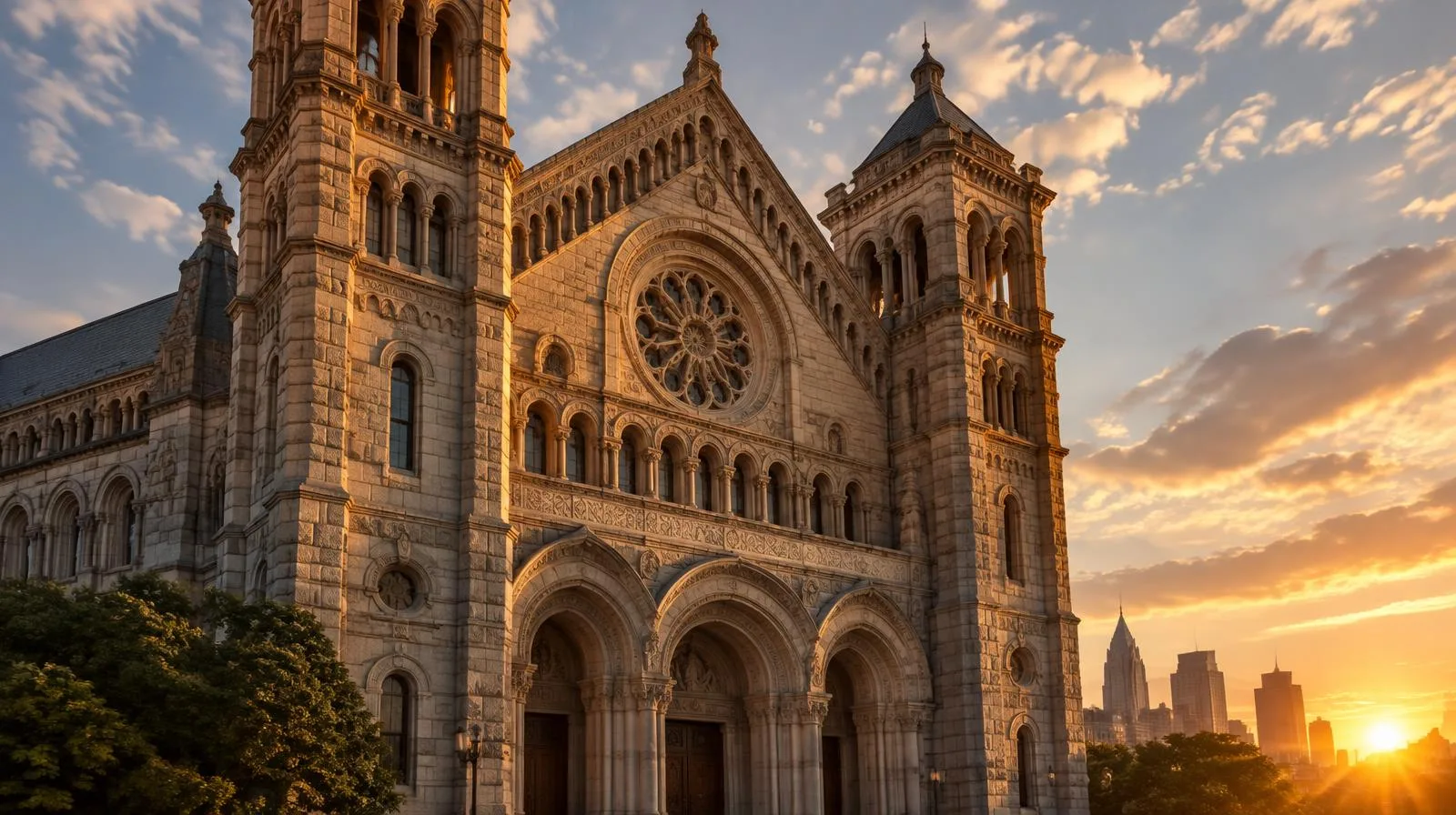
Turn the corner from Philadelphia’s bustling Market Street onto North Broad, and the modern city gives way to an imposing stone landmark. Standing opposite City Hall, the philadelphia masonic temple rises like a medieval fortress dropped squarely into the city grid. For passing commuters, its arches and Norman-style towers are an architectural curiosity; for the travelling Freemason and the discerning student of history, this majestic edifice offers a compelling encounter with American Masonic heritage. Dedicated in 1873, it is both the headquarters of the Grand Lodge of Pennsylvania and the home of the Masonic Library and Museum of Pennsylvania. Come for the architecture, but leave time for the distinction that makes this place especially rewarding: it is a historic monument that remains a working fraternal home.
The Epicenter of American Craft Freemasonry
To understand the grandeur of the Philadelphia Masonic Temple, one must first appreciate Philadelphia’s early role in the Craft. Benjamin Franklin reported the existence of several lodges in Pennsylvania in December 1730. Early Philadelphia Freemasonry is also associated with Tun Tavern, although accounts differ over the precise dates of the earliest lodge activity there. The Encyclopedia of Greater Philadelphia places St. John’s Lodge meetings at the tavern in 1732. Tun Tavern is also traditionally remembered as the birthplace of the United States Marine Corps. These overlapping associations make an evocative introduction to the city, but they should not be compressed into a single, securely documented founding moment. Philadelphia is a natural destination to consider alongside the 10 Most Masonic Cities in the World.
Benjamin Franklin became Grand Master of Pennsylvania in 1734. That June, he printed an edition of James Anderson’s The Constitutions of the Free-Masons, identified by the Scottish Rite Masonic Museum & Library as the first Masonic book printed in America. This is a tangible connection between Philadelphia’s printing history and its fraternal life, rather than merely a picturesque tradition. The present temple belongs to a much later chapter. It was not Franklin’s lodge building, nor was it Philadelphia’s first Masonic temple. Its nineteenth-century grandeur should be appreciated on its own terms, without treating the building as the physical birthplace of American Freemasonry.
A Masterpiece of Norman and Eclectic Architecture
In 1867, James H. Windrim won the competition to design the new Masonic Temple. He was twenty-seven years old. The site was at the northeast corner of Broad and Filbert Streets, where the building still stands. The cornerstone ceremony took place on June 24, 1868, and construction continued until 1873. The Grand Lodge’s dedication memorial commemorates ceremonies on September 26, 29 and 30 of that year. The Pennsylvania Freemason magazine reports a construction cost of $1.6 million and describes the financial challenges that Pennsylvania Masons overcame to complete the project. Those documented commitments tell a powerful story without requiring an uncertain procession count or an inflated claim about national intentions.
The exterior of the philadelphia masonic temple is Norman in style, with a monumental stone presence that invites the fortress comparison. Inside, the architectural mood changes dramatically. Rather than extending one visual language throughout the building, the lodge rooms offer a succession of historic decorative themes. For travellers comparing Philadelphia with London’s Freemasons’ Hall or Washington’s House of the Temple, that contrast is part of the pleasure. Each destination deserves to be understood in its own setting. Philadelphia’s combination of a commanding exterior and varied interiors makes a persuasive addition to a Masonic travel bucket list.
Walking Through the Seven Themed Lodge Rooms
While the exterior suggests medieval solidity, the interior offers a journey through architectural revival. The temple contains seven elaborately decorated lodge rooms, and George Herzog is associated with its interior design. These are not ancient interiors transported intact into Philadelphia. They are interpretations of historical styles within a modern Masonic building. That distinction makes them no less impressive, and it gives visitors a useful starting point for thinking about lodge room architecture and symbolism. Look first at the room as a whole, then ask your guide about particular decorative features and their documented meanings.
Think of the seven halls as a journey through architectural imagination, not as evidence that modern Freemasonry descends directly from every civilization represented in their decoration.
Oriental Hall
Oriental Hall brings a Moorish-inspired character to the sequence of rooms. Its historical name belongs to the temple’s own vocabulary and should not be mistaken for a precise description of the many cultures once grouped under that broad label. Let the decoration set the mood, but resist turning atmosphere into an unsupported history lesson. A productive question for the guide is how the designers adapted their architectural references for a Masonic meeting room. That approach allows the hall to remain visually transporting while keeping interpretation rooted in the building itself.
Egyptian Hall
Egyptian Hall offers another striking change of scene. Its Egyptian-inspired decoration makes it one of the temple’s most memorable rooms, and it is featured in accounts of the public tour. For a visiting Mason, the setting may invite reflection on the fraternity’s interest in antiquity and symbolism. It does not, however, establish a historical line of descent from ancient Egyptian religious institutions to modern lodge practice. Appreciate the room as architectural revival, and ask which particular images or motifs the guide can explain. There is ample wonder here without claiming that every painted detail has an authenticated ancient ritual meaning.
Ionic and Corinthian Halls
Ionic and Corinthian Halls turn the visitor’s attention toward classical architectural language. Their names refer to classical orders, distinguished in part by their column capitals: Ionic capitals are associated with scroll-like volutes, while Corinthian capitals characteristically use acanthus-leaf ornament. Those broad references provide a useful visual starting point, rather than a complete inventory of either room. As you move through the temple, consider how changing decorative styles alter the feeling of a meeting space. The Grand Lodge and local lodges conduct meetings in the building, but room assignments, capacities and access should be confirmed rather than inferred from a hall’s grandeur.
Norman, Renaissance, and Gothic Halls
Norman, Renaissance and Gothic Halls complete the seven-room sequence. Their names continue the building’s conversation with historical architecture, offering different settings within a shared fraternal home. Avoid assuming that a room’s style tells you exactly which organization may use it today. In particular, a Gothic atmosphere is not by itself evidence of exclusive use by a chivalric order. For the traveller, the rewarding exercise is comparison: notice how each room changes your sense of scale, ceremony and enclosure, and ask the guide to distinguish original design, later decoration and present-day use.
Treasures of the Museum and Archives
Beyond its functioning lodge rooms, the philadelphia masonic temple houses a collection worth considering alongside the greatest Masonic libraries and museums in the world. The temple’s official media information describes the John Wanamaker Resource Center as holding more than 30,000 items relating to Freemasonry in Pennsylvania and beyond. That figure refers to the collection, not to the number of objects a visitor can expect to see on display. A museum visit and an archival research appointment are different experiences, so researchers should make arrangements in advance rather than assume that a tour includes access to stored material.
Among the collection’s most important objects is a Masonic apron that belonged to George Washington. The museum’s own account explicitly distinguishes its established ownership from the familiar Lafayette story. The tradition that Madame Lafayette embroidered it and that the Marquis presented it to Washington in August 1784 cannot be documented as fact. The same museum account says research suggests that the apron was made in China. It records the apron’s presentation to the Grand Lodge of Pennsylvania by the Washington Benevolent Society on July 3, 1829. These qualifications enrich the object’s story rather than diminishing it. For travellers also considering the George Washington Masonic National Memorial in Alexandria, it offers another avenue into Washington’s Masonic associations.
The wider collection invites attention to the material life of the fraternity: texts, artifacts and the ways institutions preserve their own history. Franklin’s 1734 printing provides valuable context, but do not assume that a particular edition, letter or piece of silver will be on display during your visit. Ask the museum about current exhibits and about any object you especially hope to see. The most satisfying encounter with an archive often begins with a specific question, not with a promise that every celebrated treasure will be waiting in a glass case.
Pennsylvania’s Distinct Ritual Tradition: The Ancients’ Legacy
For visiting Masons, the philadelphia masonic temple offers more than visual magnificence. Pennsylvania’s Masonic history includes both the early Moderns tradition associated with Franklin and an important Antients inheritance. The Antients Grand Lodge formed in London in 1751 as a rival to the older Grand Lodge, which its opponents called the Moderns. Historian Ric Berman emphasizes the role of London’s Irish community in the new organization’s development. Laurence Dermott became its influential grand secretary, but describing him simply as its founder obscures that broader origin.
Dermott published the Antients’ book of constitutions under the title Ahiman Rezon in 1756. Pennsylvania also uses that title for its governing constitution. This is a meaningful historical connection, but it does not establish that every aspect of Pennsylvania ritual has remained unchanged for two centuries. Nor should visitors assume that other Grand Lodges all operate directly under Anderson’s original text. Approach local practice with curiosity rather than a checklist of supposed differences. Pennsylvania’s official visitation guidance provides courtesy aprons and welcomes visitors’ traditional Masonic dress, a more useful guide than a blanket claim about identical blue aprons or universal formal attire.
Planning Your Visit: Practical Advice and Protocol
Whether you are a Master Mason making a fraternal pilgrimage or an architecture enthusiast admiring American historic preservation, visiting the philadelphia masonic temple rewards a little preparation. Keep public sightseeing, attendance at a lodge meeting and archival research separate in your planning. They involve different arrangements, and admission to one should not be treated as permission to undertake the others.
Public Guided Tours
The temple welcomes the general public on guided tours. Its published regular schedule lists one-hour tours from Wednesday through Saturday, with closures and cancellations for holidays, Masonic functions and special events. Check the official tour-hours and visitor-information pages for current times, admission prices and booking arrangements before travelling. The museum explicitly states that visitors may not walk around the building on their own. Ask staff about photography and equipment policies rather than assuming that personal photography is unrestricted or that particular equipment rules apply.
Visiting as a Brother
If you are a Master Mason in good standing hoping to attend a meeting, confirm your eligibility and the host lodge’s arrangements beforehand. Public tour admission is not admission to a tiled lodge. Pennsylvania’s official guidance offers a practical framework:
- Confirm recognition through the appropriate lodge or Grand Lodge channels, using international Masonic visitation protocol as background rather than as a substitute for official confirmation.
- Bring a paid-up current year’s dues card or receipt, a Travel Certificate, or other proof of membership and current good standing accepted under the applicable guidance. A separate secretary’s letter is not stated as a universal requirement.
- Arrange advance notice through the proper channels. Ask about the meeting date, dress expectations and any meal arrangements. Follow your own jurisdiction’s rules for correspondence with other jurisdictions.
- Arrive with time for verification. If no member can vouch for you, Pennsylvania’s guidance says the Tyler will arrange for a committee to verify your credentials and claim to Masonic membership.
The published preferred minimum dress for members is business dress, described as a suit or a coat and tie with suitable trousers and shoes, without denim or sneakers. Confirm expectations for the particular occasion. Courtesy aprons are available, and the Grand Lodge’s guidance welcomes visitors’ traditional Masonic dress.
Around the Neighborhood
The temple’s address, 1 North Broad Street, places you in Center City directly across from Philadelphia City Hall. Reading Terminal Market is within walking distance and makes a convenient candidate for a meal before or after your tour. The temple’s visitor information also identifies LOVE Park and the Pennsylvania Academy of the Fine Arts among nearby attractions. Independence Hall and the Liberty Bell can form another part of a broader Philadelphia itinerary, but allow time for the route, admission arrangements and your own walking pace. A relaxed day is more rewarding than one built around an overly confident fifteen-minute estimate.
Frequently Asked Questions
Can non-Masons tour the Philadelphia Masonic Temple?
Yes. Guided tours are offered to the public, and no Masonic membership is required to appreciate the architecture and exhibits. Check the official website for the current schedule, admission details and any closures. Visitors must remain with the guided visit rather than explore the building independently.
Can visiting Masons attend meetings in these historic rooms?
Eligible visiting Masons can arrange to attend meetings, subject to recognition, proof of good standing and the host lodge’s procedures. Confirm the particular lodge’s meeting location and date. Bring appropriate membership credentials, allow time for examination if no member can vouch for you, and ask about dress expectations in advance.
How much time should I set aside for a visit?
The official schedule describes the standard guided tour as one hour. Allow additional time for arrival and any separately available activities, but do not plan on several hours of independent exploration inside the temple. If your interests include museum objects or archival research, ask staff what can be accommodated and whether a separate appointment is needed.
Is the building accessible for travelers with mobility needs?
The temple’s event venue, ONE North Broad, states that its facilities are wheelchair accessible and lists ramps at the main entrance and a chair lift. Contact the temple before arrival to confirm the appropriate entrance, access along the current tour route and any assistance you require. The published accessibility information does not justify promising a particular elevator arrangement between every floor.
Sources
- Masonic Library and Museum of Pennsylvania: Temple and collection overview
- Encyclopedia of Greater Philadelphia: Tun Tavern
- Scottish Rite Masonic Museum & Library: Franklin’s 1734 Constitutions
- Masonic Temple museum: George Washington’s apron and its provenance
- Ric Berman: The London Irish and the Antients Grand Lodge
- Masonic Temple: Guided tour hours and schedule changes
- Grand Lodge of Pennsylvania: Official lodge visitation guidance
- ONE North Broad: Accessibility information