Stand before a weathered gravestone and let your eyes adjust. A pair of compasses emerges from the carving; beside it, a branch you almost mistook for decoration. Reading masonic gravestone symbols begins with this small pleasure: noticing something that changes how you see the whole memorial.
Then comes the more interesting task. An eye belongs to several symbolic traditions; a broken column invites questions about a life interrupted. Before turning a carving into someone’s biography, pause over the inscription. The reward is not a collection of mysterious signs, but a clearer glimpse of a person remembered.
How can you identify a Masonic gravestone?
Start with the complete memorial, not its most intriguing detail. Read the inscription, record the emblems and look for a named lodge or other Masonic body. Keep observation separate from interpretation: write down what is legible before deciding what it means.
Square and compasses: your strongest starting point
The square and compasses, with or without a central letter G, is a strong indication of Masonic membership, according to American Ancestors’ guide to gravestone symbolism. On a shared memorial, photograph the relationship between the emblem and each inscription, then investigate the people individually.
Pay attention to the arrangement, but resist treating every difference as a code. The Grand Lodge of British Columbia and Yukon’s survey records considerable variation in early compasses depictions. It also describes particular angles used for Grand Masters and Past Grand Masters in many jurisdictions. For a proposed identification of rank, seek evidence appropriate to that jurisdiction rather than beginning with a protractor.
Carry that habit of close observation into reading stonemasons’ marks. If public monuments interest you too, continue with the Masonic cornerstone trail, keeping a photograph of the full inscription alongside each intriguing detail.
Broken columns and acacia: reading loss and immortality
The broken column
First distinguish a column carved to appear broken from a monument that has suffered damage. Record the termination and accompanying figures or objects. If you cannot decide, leave the question open in your notes rather than supplying a confident caption.
American Ancestors interprets the broken column as a life cut short, whether through early death or before a person could accomplish their goals. At Afterglow Vista, the National Park Service describes unfinished work after death within a memorial combining neoclassical elements and Masonic symbolism. These interpretations suggest questions to investigate, including age and circumstances of death.
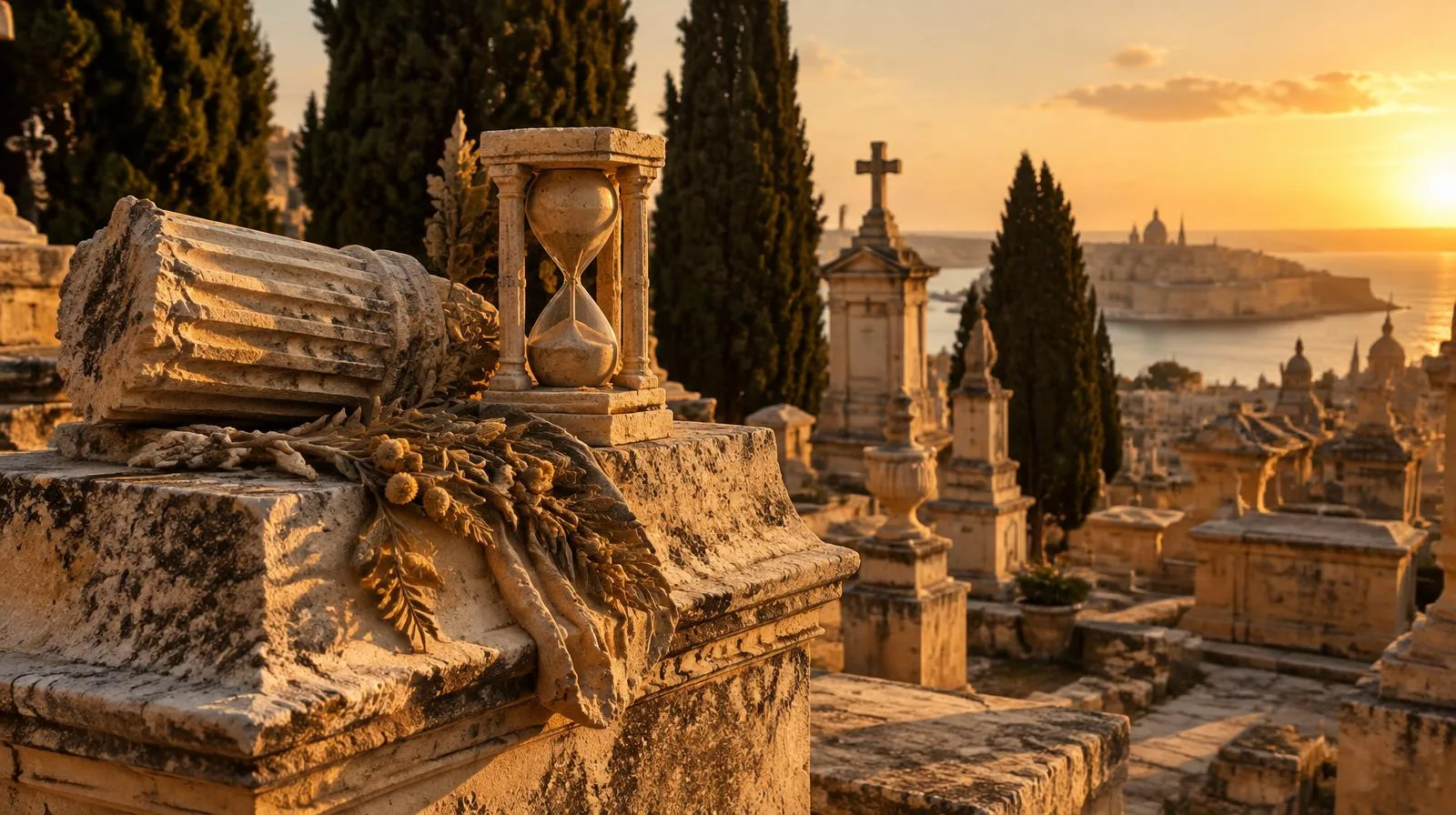
For a specifically Masonic comparison, consider the grouping of a weeping woman, column, open book, sprig, urn and Time. The Grand Lodge’s historical survey, quoting Coil’s Masonic Encyclopedia, records these elements in John Barney’s monitor of 1817. It says Jeremy L. Cross is often credited with devising the grouping, although related imagery preceded his writings. Avoid assigning the whole composition to a single inventor.
For further visual study, turn to Masonic tracing boards. Practise describing a composition as a whole before interpreting its individual objects.
The sprig of acacia
Albert G. Mackey presents the acacia principally as a symbol of the immortality of the soul, while also discussing innocence and initiation. Attribute these meanings to Masonic interpretation rather than treating them as a botanical identification key.
Mackey places the acacia’s connection with Hiram Abif within Masonic legend and allegory. Preserve that distinction. In a field note, try “leafy sprig, possibly acacia” while you seek a clearer photograph, an inscription or documentation supporting the identification.
Are the all-seeing eye and hourglass always Masonic?
The all-seeing eye
The eye has a broad religious and artistic history. The Grand Lodge’s study describes the eye surrounded by radiating lines as a Christian representation of the all-seeing eye of God, and records the eye within a triangle in Christian settings. Neither arrangement is exclusively Masonic.
The same study reports no available documents associating the all-seeing eye with Freemasonry before 1797. That is the source’s assessment of the documentation, not a rule for dating an unfamiliar stone. Record the triangle, rays, clouds and neighbouring emblems, then investigate the monument’s history.
Apply this approach to architectural ornament as well. If an eye catches your attention on a facade, photograph the building and its identifying details, not merely the symbol. Keep your proposed interpretation separate from the caption until you have checked it.
The hourglass
An hourglass deserves the same contextual care. Stichting Argus’s account of Odd Fellows symbolism lists it among that fraternity’s emblems, alongside such objects as the scythe and coffin. Its presence therefore invites comparison beyond Freemasonry.
Begin with the straightforward description “hourglass”. Look for accompanying letters, institutional names and other emblems before choosing a narrower attribution. For research purposes, an accurately described object is more useful than a confidently assigned affiliation that you have yet to check.
Royal Arch, Templar and regional variants
Royal Arch: recognise the triple tau
The triple tau is an emblem adopted by the Royal Arch, a concordant body of Freemasonry. Its form consists of three Ts linked centrally at their bases. Sketch the actual junctions rather than recording only “cross-like symbol”.
The Grand Lodge’s explanation offers several interpretations, including a reference to the Temple of Jerusalem, and describes teachings specific to some jurisdictions. Use the emblem as a starting point for Royal Arch research; seek chapter names and offices in inscriptions or records.
Templar clues: let inscriptions lead
A cross and crown has both Christian and Masonic Templar associations. Daily Ancestor’s explanation describes suffering followed by heavenly reward, while identifying accompanying Masonic signs or the letters K.T. as clues worth following into lodge or commandery records.
A Canadian cemetery inventory records “K+T in circle” on a tablet for Roman Z. Chandler, alongside other Masonic imagery on the wider monument. Follow that inventory’s descriptive approach: preserve letters and shapes before expanding an abbreviation. For related reading, turn to Tomar and the Templar imagination.
How much do region and era matter?
Keep the source’s geographical and historical setting attached to its explanation. The compasses survey describes jurisdictional practices; the Royal Arch account also notes local teachings. When investigating a particular memorial, begin with its inscription and regional records.
If architectural style catches your interest, continue with Egyptian Revival Masonic temples. For your own cemetery notes, keep style, symbolic interpretation and documented affiliation as separate entries. This makes later corrections much easier.
Where can you practise in Malta?
Msida Bastion Historic Garden in Floriana and Ta’ Braxia Cemetery in Pietà offer documented settings for studying funerary monuments. Approach them as exercises in observation. If you particularly want to examine Masonic carvings, ask the custodians which memorials they can identify before planning around a particular emblem.
Din l-Art Ħelwa records the earliest discovered memorial at Msida Bastion as dating to 1806. Very few burials followed the opening of Ta’ Braxia in 1857, apart from those in existing family graves. Its history also describes neglect, wartime damage and difficult-to-read inscriptions. Allow an incomplete reading to remain incomplete.
Ta’ Braxia was designed by Emanuele Luigi Galizia and opened in 1857. Din l-Art Ħelwa records that wartime bombing damaged ornamental monuments and flattened headstones. Keep this history in mind when examining a broken architectural feature: investigate its condition before proposing a symbolic meaning.
For further trip reading, see Masonic travel in Malta. Check current access, photography permissions and any guided-tour arrangements with the custodians before you go. The CWGC page for Ta’ Braxia provides visiting information, which should also be checked before travelling.
If you would like an indoor visit as well, explore Masonic halls open to the public. Keep cemetery access and lodge-building access as separate enquiries rather than assuming the same arrangements apply.
Save this gravestone-reading checklist for offline use
- Read first. Transcribe names, dates, initials and institutional wording exactly. Mark illegible characters instead of filling gaps.
- Photograph the context. Where permitted, record the complete memorial, inscriptions and individual emblems. Keep those images together.
- Describe before interpreting. Start with “three joined T shapes” or “leafy sprig”, then add a proposed identification.
- Check the attribution. Look for named bodies and consult records relevant to the person and locality.
- Record uncertainty. Separate legible wording, probable interpretations and unresolved details.
- Leave the stone untouched. Do not chalk, wet, rub or clean it for a photograph. Respect barriers, mourners and custodians’ instructions.
- Follow up. Save the cemetery name and plot reference where available. Ask about the person as well as the emblem.
The best result is a small, accurate record that another visitor or researcher can check, with room left for what remains unknown.
Frequently asked questions
Does a square and compasses prove someone was a Freemason?
American Ancestors calls it a strong indication of membership. Follow that clue through inscriptions and records, researching each named person individually on a shared memorial.
Does a broken column mean the deceased died young?
Early death is one documented interpretation. American Ancestors also describes goals left unfulfilled, while the National Park Service explains unfinished work at Afterglow Vista. Check the recorded age rather than estimating it from the carving.
Can I identify a Royal Arch or Templar grave from one symbol?
The triple tau is a Royal Arch emblem. A cross and crown has Christian as well as Masonic Templar associations. Record accompanying letters and institutional names, then pursue the relevant records.
How should I plan a cemetery visit in Malta?
Check access with the custodians before you go, and ask about particular memorials if Masonic imagery is your priority. Confirm photography permissions and current tour arrangements separately.
Sources
- American Ancestors: gravestone symbolism and research clues
- Grand Lodge of British Columbia and Yukon: compasses angles and variation
- Grand Lodge of British Columbia and Yukon: monument imagery and its history
- Wikisource: Mackey’s interpretations of acacia
- Grand Lodge of British Columbia and Yukon: the all-seeing eye
- Stichting Argus: Odd Fellows emblems
- Grand Lodge of British Columbia and Yukon: the Royal Arch triple tau
- Din l-Art Ħelwa: Ta’ Braxia Cemetery history
- Din l-Art Ħelwa: Msida Bastion Historic Garden history