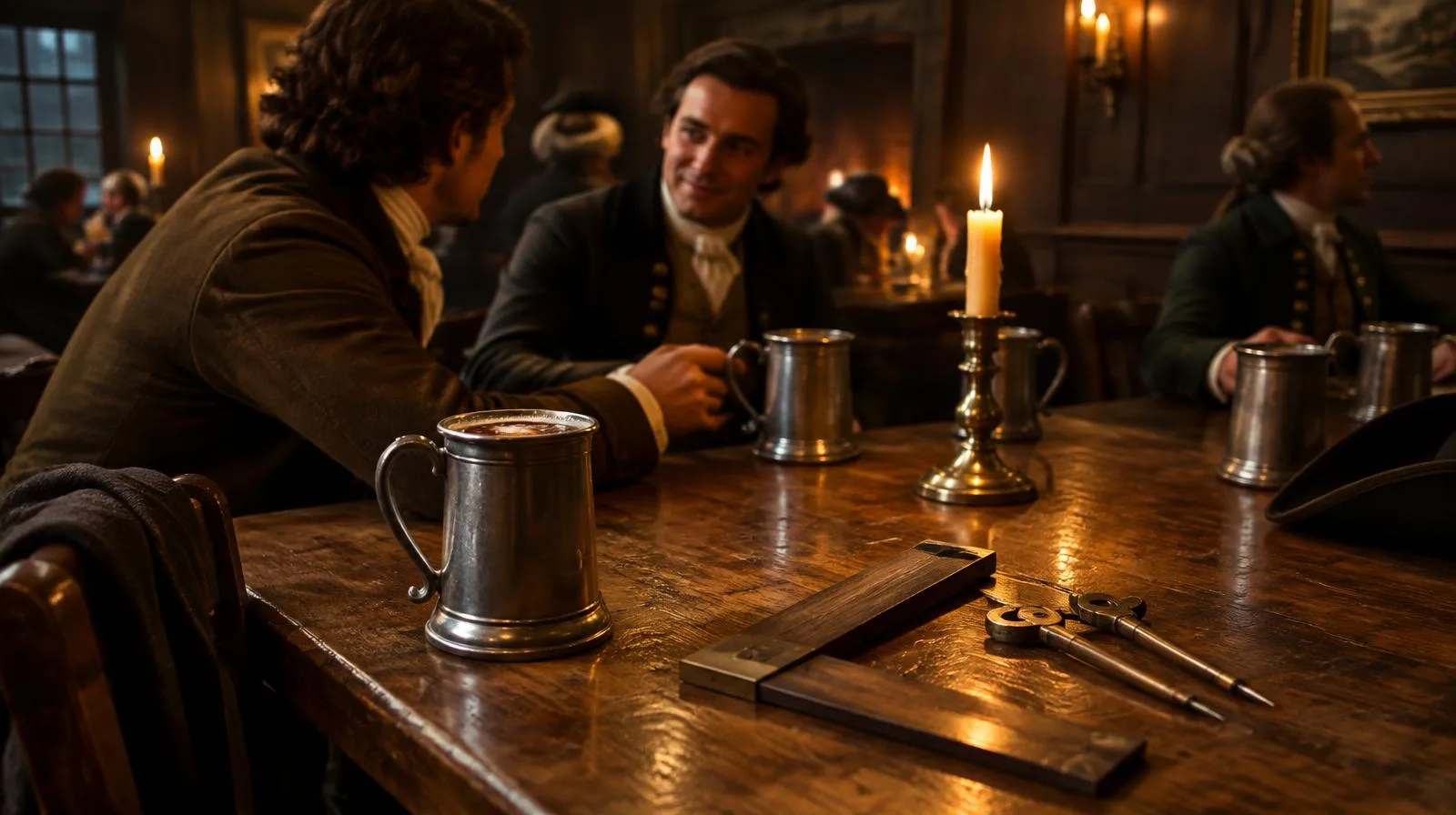
Some brethren sat before empty plates. At the Lahore lodge banquets Kipling later recalled, caste restrictions prevented certain men from eating food that had not been ceremonially prepared, yet they remained at the table. The Rudyard Kipling Freemason story begins with this arresting image: fellowship could cross boundaries without making those boundaries disappear.
His remembered lodge brought together different religions, professions and backgrounds, a room where the language of rank gave way to brotherhood. But memory is not a minute book, and a poem is not a census. Behind this affectionate portrait lie disputed recollections, a real Lahore setting and a question for travellers: what can we responsibly encounter today?
When did Rudyard Kipling become a Freemason?
Kipling was initiated into the Lodge of Hope and Perseverance No. 782, under the English Constitution, at Lahore on 5 April 1886. He was twenty. Because he had not reached twenty-one, his admission required a dispensation. The Kipling Society places the ceremony at the Masonic Hall in Anarkali, the building identified with the Jadughar in his fiction.
The year matters because Kipling himself later remembered it as 1885. His autobiographical recollection is valuable testimony about what the experience meant to him, but not an infallible chronology. The Kipling Society and the Grand Lodge of British Columbia and Yukon give 1886.
A research account preserved by the latter records his passing on 3 May and his raising on 6 December 1886. Passing advances a candidate to the Fellowcraft degree; raising is the third Craft ceremony. These terms are explained in the United Grand Lodge of England’s introduction to lodge proceedings.
There was ordinary work to do as well. UGLE says the young journalist was immediately appointed secretary because he possessed a typewriter. The Kipling Society also describes his preparation of papers for the brethren. Here was participation, not simply a famous name later claimed for the Craft, a personal thread to follow alongside Freemasonry’s worldwide expansion.
A multifaith lodge, and a memory that needs checking
Kipling’s best-known account of his ceremonies is strikingly international in spirit. He recalled being entered by a member of the Brahmo Samaj, passed by a Muslim and raised by an Englishman. He also remembered an Indian Jewish Tyler. The Kipling Society reproduces this recollection in its notes on The Mother Lodge.
That sequence should not be treated as uncontested fact. The research lecture preserved by the Grand Lodge of British Columbia and Yukon identifies the initiating Master as Colonel G. B. Wolseley. Another account on its website expressly notes a conflict between Kipling’s description of his initiation and the lodge minutes. The careful formulation is that he remembered his progress in those multifaith terms.
The broader diversity has stronger support than that precise sequence. His autobiography recalls Muslims, Hindus, Sikhs, members of the Arya and Brahmo Samaj, and a Jewish Tyler. Dr M. Enamul Karim’s historical study describes efforts to encourage Indian participation, including choosing a building site in old Anarkali rather than beside the exclusive Punjab Club.
The empty plates belong to Kipling’s later recollection. He attributed them to caste restrictions on eating food not ceremonially prepared. There is no need to introduce an explanation involving lodge punishment: that is not what his account describes. Men could share company without sharing the meal.
This is a useful question to carry into any consideration of Masonic dining traditions: what makes a table genuinely welcoming? For companion reading, turn to Freemasonry and beer or Freemasonry and coffee, without assuming that either drink defined Kipling’s Lahore experience.
What does The Mother Lodge tell us about the Raj?
The Mother Lodge first appeared in the Pall Mall Gazette and Pall Mall Budget on 9 May 1895. According to the Kipling Society, it was written while Kipling was living in Vermont, some eight years after his initiation. It is a poem of distance and attachment, not a report dispatched from a meeting.
Its central contrast is between the ranks and forms of address observed outside and the fraternal relationship practised within. Different occupations and creeds become one remembered company. Vernacular speech gives that company its character: the lodge is evoked through voices, not merely through principles.
There is also an important distinction between poem and reminiscence. In the poem itself, the speaker says that banquets were avoided lest a brother’s caste be broken. The prose recollection instead describes men sitting before empty plates. Both concern fellowship and dietary boundaries, but they should not be merged into a single documentary scene.
The poem’s generosity does not settle every argument about Kipling or the Raj. Equality within a lodge cannot, by itself, demonstrate equality beyond it. Indeed, the contrast between inside and outside depends upon differences of rank and social standing that the speaker still recognises.
A stronger reading allows the aspiration and its limits to coexist. The lodge could make encounters across divisions meaningful without erasing the world surrounding it. A mother lodge is the lodge of a Mason’s initiation; here, it also becomes a remembered community. Read the poem before travelling and notice what its speaker misses: people, familiar voices and the experience of belonging.
The Jadughar in Kim: locating Kipling’s Masonic Lahore
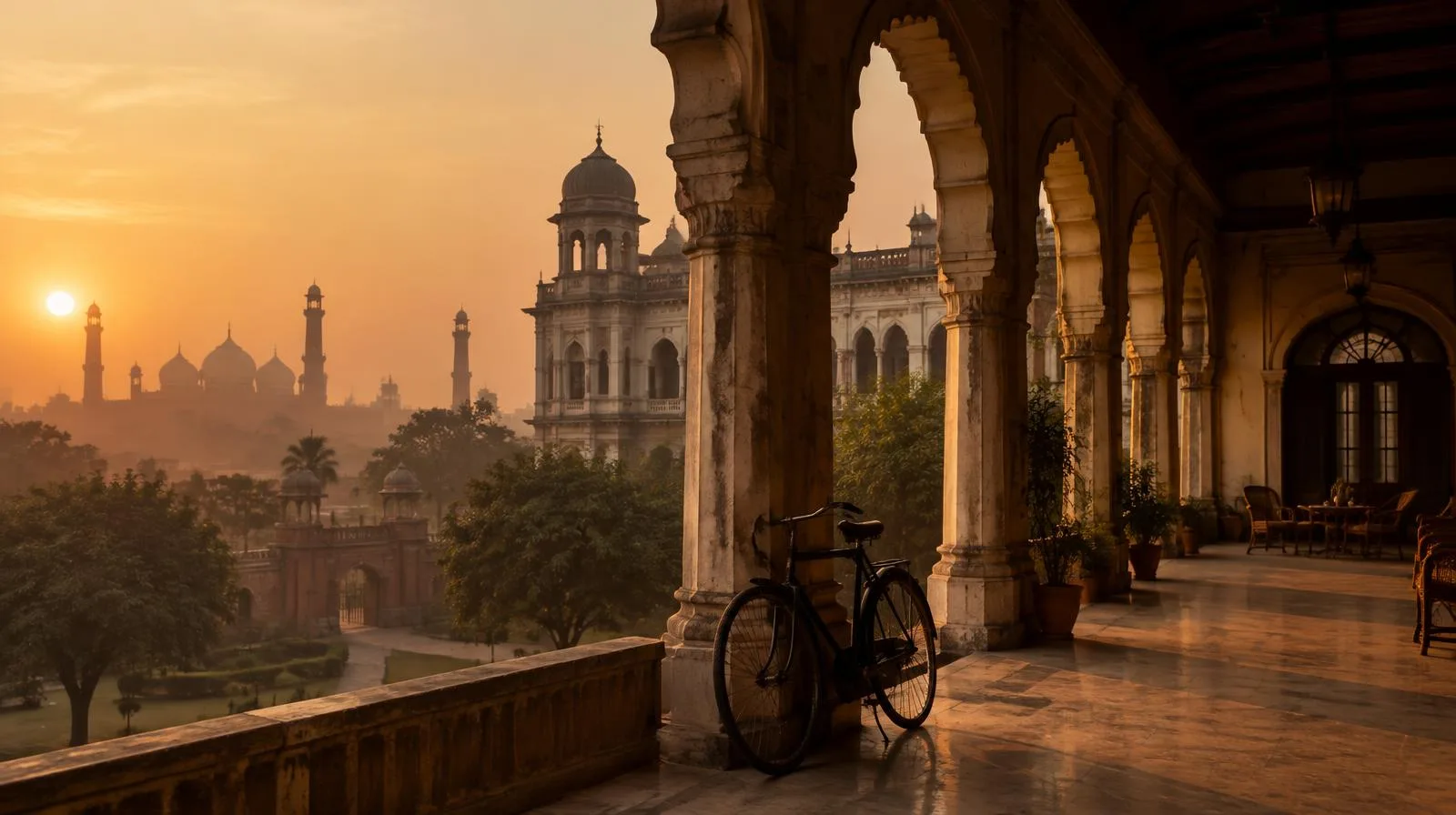
For readers of Kim, the connection is unusually direct. The Kipling Society identifies the novel’s big blue-and-white Jadoo-Gher with the Masonic Hall in Anarkali where Kipling was initiated. Its commentary also uses the spelling Jadughar.
Do not confuse this with the Ajaib-Gher, the museum associated with the novel’s opening. The Society’s notes distinguish the two and identify Kipling’s father, John Lockwood Kipling, as curator of the Lahore Museum during his son’s years in India. Keeping those references separate prevents a literary itinerary from joining together two different places.
The same notes record that Kipling decorated the hall’s bare walls with his father’s advice. His autobiography describes hangings conceived after Solomon’s Temple. Read this as biblical and Masonic imagery, not a claim of ancient architectural descent. It is a useful starting point for thinking about lodge room architecture and symbolism.
For present-day planning, keep the historical identification separate from questions of survival and access. Ask what building is being identified, on what evidence, and what can lawfully be seen. Neither a literary association nor an evocative description should become an unverified promise of an intact nineteenth-century room.
Can you visit Kipling’s lodge in Lahore today?
Treat the original hall as a research enquiry rather than a confirmed visitor attraction. The Kipling Society reports Hope and Perseverance as still existing within the English Masonic structure but not meeting. That attributed statement is not a current visitor notice or an assurance of access.
If planning a literary visit, ask a knowledgeable local guide to verify the historic Anarkali location and any proposed building identification. Establish lawful access and photography permissions before including an interior visit. If those checks cannot be made, leave the interior off your itinerary rather than treating uncertainty as an invitation to explore.
Security needs its own assessment. The FCDO’s Pakistan security guidance warns of terrorism and records attacks in Lahore as well as other major cities. Read it alongside the overall and regional advice it links to, and check again before departure.
Check visa requirements, insurance and transport arrangements before booking. British travellers should consult the official entry requirements; other nationalities should establish the rules applicable to them. A convincing historical identification cannot answer these present-day questions.
Dublin and the surviving Lahore connection
Dublin offers another way into Lahore’s Masonic story, but distinguish the lodges. Emerald Isle Lodge No. 19 belongs to the Irish Constitution. It is not Kipling’s Hope and Perseverance No. 782.
A 2016 account published by Freemasonry Matters describes Emerald Isle’s warrant returning from Pakistan and Irish brethren keeping it alive in the hope that circumstances would change. The Provincial Grand Lodge of the Metropolitan Area lists Emerald Isle among Dublin’s lodges. This supports a continuing institutional connection, not the claim that Kipling’s own lodge moved to Ireland.
The provincial directory gives Emerald Isle’s meeting night as the first Tuesday and notes that metropolitan lodges generally do not meet in June, July or August. Check before you go. It asks visiting brethren to contact the lodge secretary in advance. Make that contact part of your preparation for international Masonic visitation, rather than relying on a calendar alone.
For the general traveller, Freemasons’ Hall on Molesworth Street offers an advertised public destination. The Grand Lodge of Ireland describes museum displays of regalia and historic documents, and offers public hall tours. It advises advance contact for a special journey. When considering Masonic halls open to the public, do not assume that tour admission grants permission to attend a lodge meeting.
Dublin is not a substitute for Lahore. It invites a different reflection: how can a lodge’s identity endure away from the place that formed it? Kipling’s poem asks a related question, preserving a company of men after its author had left their city.
Frequently asked questions
Was Rudyard Kipling really a Freemason?
Yes. He was initiated into Lodge Hope and Perseverance No. 782 in Lahore on 5 April 1886, aged twenty, with a dispensation because he was under twenty-one.
Were Kipling’s degrees conducted by men of different faiths?
That was his later recollection, but documentary accounts challenge his description of the initiation. The lodge’s religious diversity is supported; the exact sequence of officiants requires caution.
Is the Jadughar in Kim a real Masonic hall?
The Kipling Society identifies it with the Masonic Hall in Anarkali, Lahore, where Kipling was initiated. Verify any proposed present-day building visit separately.
Can non-Masons explore the Dublin connection?
The Grand Lodge of Ireland advertises public museum access and tours at Freemasons’ Hall. Check arrangements before travelling, and do not treat a public visit as permission to attend Emerald Isle’s meetings.
Sources
- United Grand Lodge of England: Kipling’s initiation and lodge service
- The Kipling Society: The Mother Lodge and its historical background
- The Kipling Society: Kim and the Anarkali Masonic Hall
- Grand Lodge of British Columbia and Yukon: Kipling’s ceremonies
- Freemasonry Matters: M. Enamul Karim on Hope and Perseverance
- FCDO: Pakistan safety and security guidance
- Freemasonry Matters: Emerald Isle’s Lahore connection
- Provincial Grand Lodge of the Metropolitan Area: lodge directory and visiting advice
- Grand Lodge of Ireland: public museum access and hall tours